T: +86-18367823571
E: lyy@xg1688.cn
E: lyy@xg1688.cn
Building 2, No. 84, Qingxi Dongfeng Road, Qingxi Town, Dongguan City, Guangdong Province, 523642, China

Views: 0 Author: Site Editor Publish Time: 2026-10-15 Origin: Site
Grain loss during combine harvesting can reduce crop yield, grain quality, and farm profitability. Losses may occur before harvesting, at the header, or inside the combine's threshing, separation, and cleaning systems. Identifying the source is the first step toward effective loss control.
This guide explains how to identify grain loss, measure it in the field, adjust combine settings, and maintain equipment during harvest. For an overview of available machines, explore the Thinker combine harvester range.
Table of Contents
Grain loss can happen at different stages of harvesting. Each source requires a different inspection method and corrective action.
Pre-harvest loss occurs before the combine enters the field. Wind, delayed harvesting, lodging, pests, disease, and natural grain shattering can cause grain to fall to the ground.
Before harvesting, inspect several representative areas of the field. Record the grain already on the ground so you can distinguish existing losses from those caused by the combine.
Header loss occurs when the machine fails to gather the crop or knocks grain loose before it enters the feeder house. Common causes include incorrect header height, unsuitable reel speed or position, worn cutting components, and poor adjustment for crop conditions.
Inspect the ground beneath and immediately behind the header after the machine passes. Look for missed crop, fallen ears or pods, and loose kernels. The specific signs depend on the crop being harvested.
After crop material enters the combine, grain may remain attached to the crop, escape with straw, or be blown out with chaff.
Possible causes include unsuitable threshing settings, overloaded crop flow, incorrect sieve openings, excessive fan speed, blocked components, or worn parts.
Inspect the grain sample in the tank and the residue leaving the rear of the machine. Broken kernels, unthreshed grain, and grain mixed with discharged residue can help identify where adjustment is needed.
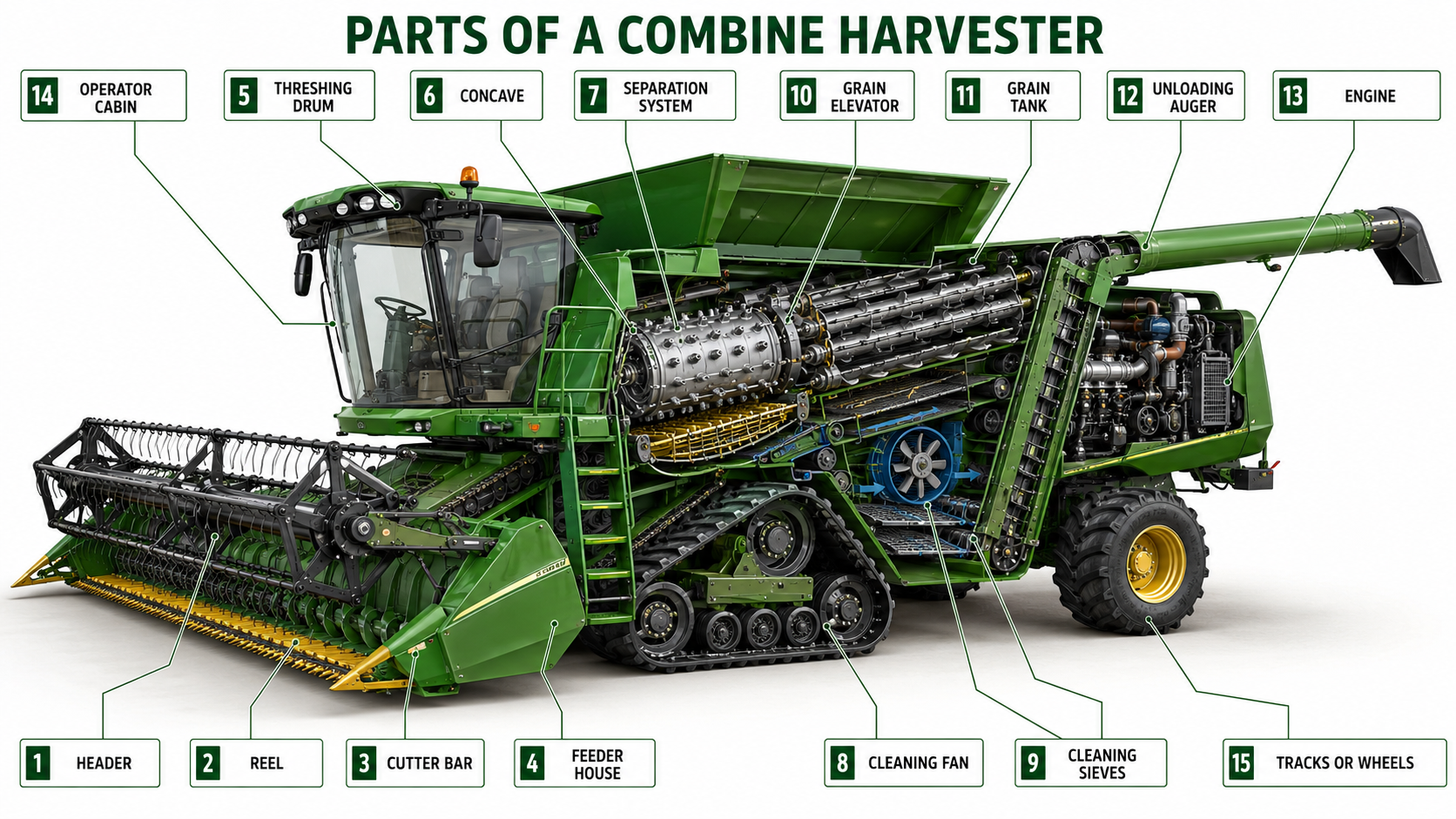
For a closer look at the components involved, read Parts of a Combine Harvester and Their Functions.
Accurate measurement helps operators determine whether losses are acceptable and which adjustments deserve attention. Use a consistent method and follow crop-specific guidance where available.
Check several locations across the header width rather than relying on one sample. Grain loss may vary from the left side to the right side because of uneven crop conditions, machine settings, or terrain.
A practical inspection routine is to:
Record grain already on the ground before the combine passes.
Inspect behind the header to assess crop-gathering losses.
Inspect the residue discharged from the rear to assess losses from threshing, separation, and cleaning.
Repeat the checks at several representative locations.
Compare results before and after making an adjustment.
Use a sampling frame or another consistent measurement method. For crops such as corn, dropped ears may need to be recorded separately from loose kernels. For soybeans and other small-seeded crops, seed counts and collection methods may differ.
A grain count per unit area can help estimate loss, but the conversion depends on crop type, grain size, test weight, and the sampling method. Do not apply a single kernel-count conversion to every crop.
Where an accurate estimate is required, use an established crop-specific calculation or local extension guidance. If grain loss is expressed in bushels per acre, make sure the conversion matches the crop and the measurement units.
Total grain on the ground behind a combine may include pre-harvest loss, header loss, and loss from internal systems. These sources should not be treated as one measurement without accounting for the grain already on the ground before harvesting.
Compare pre-harvest and post-harvest observations using the same sampling approach. This makes it easier to identify whether the header or the internal processing systems require attention.
The combine's feeding, threshing, separation, and cleaning systems must work together. Incorrect settings in one area can affect grain recovery and grain quality elsewhere.
Uneven feeding can overload the threshing and cleaning systems. Adjust the header and forward speed to suit crop height, density, lodging, and field conditions.
Avoid pushing crop material into the machine faster than the system can process it. Consistent feeding can help maintain stable threshing and cleaning performance.
Threshing separates grain from the crop material. The correct cylinder or rotor speed and concave clearance depend on the crop, grain moisture, machine design, and manufacturer's recommendations.
Excessive threshing intensity may increase grain damage. Insufficient intensity may leave grain attached to the crop material.
Start with the recommended settings for the specific machine and crop. Inspect the grain sample and discharged residue before making further changes.
The cleaning fan removes lightweight chaff, while the sieves separate grain from remaining impurities.
Too much airflow can carry clean grain out of the combine. Too little airflow may leave excessive chaff in the grain tank. Incorrect sieve openings can also increase grain loss or reduce grain cleanliness.
Adjust settings gradually, using the operator's manual as a guide. After each change, inspect the grain tank and discharged material to confirm whether performance has improved.
Changing several parameters simultaneously makes it difficult to identify the cause of an improvement or problem.
Use a simple process:
Identify the likely source of loss.
Change one relevant setting.
Harvest a representative section.
Recheck grain loss and grain quality.
Keep or reverse the change based on the results.
Repeat this process when crop moisture, yield, or field conditions change. Do not rely on a single setting throughout the entire harvest if conditions vary significantly.
Some modern combines use grain-loss sensors, yield monitors, and automatic adjustment systems to support harvesting decisions. Available functions vary by machine model and configuration.
Grain-loss sensors commonly monitor grain impacts or flow at specific points in the machine, often around the separation or cleaning systems. Their readings can help operators identify changes in loss during operation.
However, a sensor reading is not always a direct measurement of total grain left on the field. Sensor performance may be affected by crop type, machine settings, calibration, and operating conditions.
Verify readings with periodic field inspections and follow the manufacturer's calibration procedure.
Yield monitors estimate harvested grain flow and may record yield data across the field. They can help identify differences in field performance, but yield monitoring and grain-loss measurement are not the same thing.
Accurate yield data depends on correct calibration and suitable operating procedures. Use the monitor according to its manual and avoid treating a yield map alone as proof of where grain loss occurred.
Some combines can automatically adjust selected operating parameters or provide recommendations based on sensor inputs. Other models require the operator to make adjustments manually.
Before relying on automation, confirm which functions are available on the specific machine. Even when automatic controls are installed, manual checks of grain loss and quality remain important.
Worn, damaged, or blocked components can reduce grain recovery and create unnecessary downtime. Inspect the combine before harvest and monitor wear points throughout the season.
Check cutting sections, guards, reel components, belts, chains, and feeder-house parts for wear or damage. Ensure that crop material can enter the machine evenly.
Poor cutting or feeding performance can leave crop behind or create uneven loads in the threshing system.
Crop residue, dust, and debris can obstruct airflow or affect sensor readings. Clean and inspect these components according to the maintenance schedule.
Check for damaged sieves, blocked passages, loose connections, and worn parts that could affect grain separation or cleaning.
Inspect clean-grain elevators, chains, augers, and related components for wear, blockage, or spillage. Grain lost during internal transport may not be corrected by changing threshing settings.
Follow the operator's manual for inspection, lubrication, tensioning, and replacement intervals.
Yield monitors and grain-loss sensors serve different purposes and may require different calibration procedures. Use the manufacturer's instructions for each system.
For yield monitors, calibration may involve comparing recorded values with known harvested weights. Grain-loss sensors should be checked and adjusted according to the sensor design and operating manual.
Regular maintenance and correct calibration help ensure that operators make decisions using more reliable information.
Combine settings cannot compensate for every field problem. Harvest timing and field conditions also influence grain loss.
Delayed harvesting may increase the risk of lodging, grain shattering, weather damage, or crop deterioration. Harvesting too early may create other problems, including unsuitable grain moisture and more difficult threshing.
Follow crop-specific maturity and moisture guidance, and consider the local weather forecast when planning harvest operations.
Forward speed should match crop density, machine capacity, field terrain, and harvesting losses. Excessive speed can overload the machine or make crop gathering less consistent.
If losses increase or crop flow becomes uneven, reduce speed and inspect the header, threshing, and cleaning systems before changing multiple settings.
Residue spreaders and choppers affect how straw and chaff are distributed behind the combine. Uneven distribution may interfere with later field operations, although it is not necessarily a direct measure of grain loss.
Inspect the residue pattern and adjust the spreader or chopper according to the machine's instructions. Keep residue management separate from grain-loss measurement so that each issue can be assessed correctly.
Reducing grain loss during combine harvesting starts with identifying where the loss occurs. Pre-harvest checks, header inspections, and observations of discharged residue help operators distinguish between different sources of loss.
Accurate field sampling, gradual setting changes, regular maintenance, and appropriate use of sensors can support better harvesting decisions. The best adjustments depend on crop type, grain moisture, field conditions, and the specific combine model.
To review available equipment and confirm the right configuration for your harvesting needs, explore the Thinker combine harvester range or contact the supplier for model-specific guidance.
Grain loss may occur before harvest, at the header, or inside the combine during threshing, separation, cleaning, and grain handling. The cause should be identified before adjustments are made.
Inspect several representative locations and use a consistent sampling frame or collection method. Account for pre-harvest loss and distinguish header loss from loss in the machine's internal systems.
Header height, reel adjustment, forward speed, threshing speed, concave clearance, fan speed, and sieve openings can all affect losses. The correct settings depend on the crop and machine model.
No. Sensors can help monitor trends, but their readings depend on sensor design, calibration, and operating conditions. Periodic field checks remain important.
Maintaining the header, feeding system, sieves, fan, elevators, and sensors helps prevent blockages, spillage, poor crop feeding, and inaccurate readings. Follow the manufacturer's maintenance schedule.