T: +86-18367823571
E: lyy@xg1688.cn
E: lyy@xg1688.cn
Building 2, No. 84, Qingxi Dongfeng Road, Qingxi Town, Dongguan City, Guangdong Province, 523642, China

Views: 0 Author: Site Editor Publish Time: 2026-10-20 Origin: Site
Choosing between rubber tracks and steel tracks affects traction, durability, maintenance, and ground protection. The right option depends on the machine, soil conditions, workload, and operating environment.
Compared with tires, tracked equipment distributes machine weight across a longer contact area. This can improve flotation and traction on soft or wet ground. However, rubber and steel tracks have different strengths. Understanding these differences helps you select equipment for your working conditions.
Table of Contents
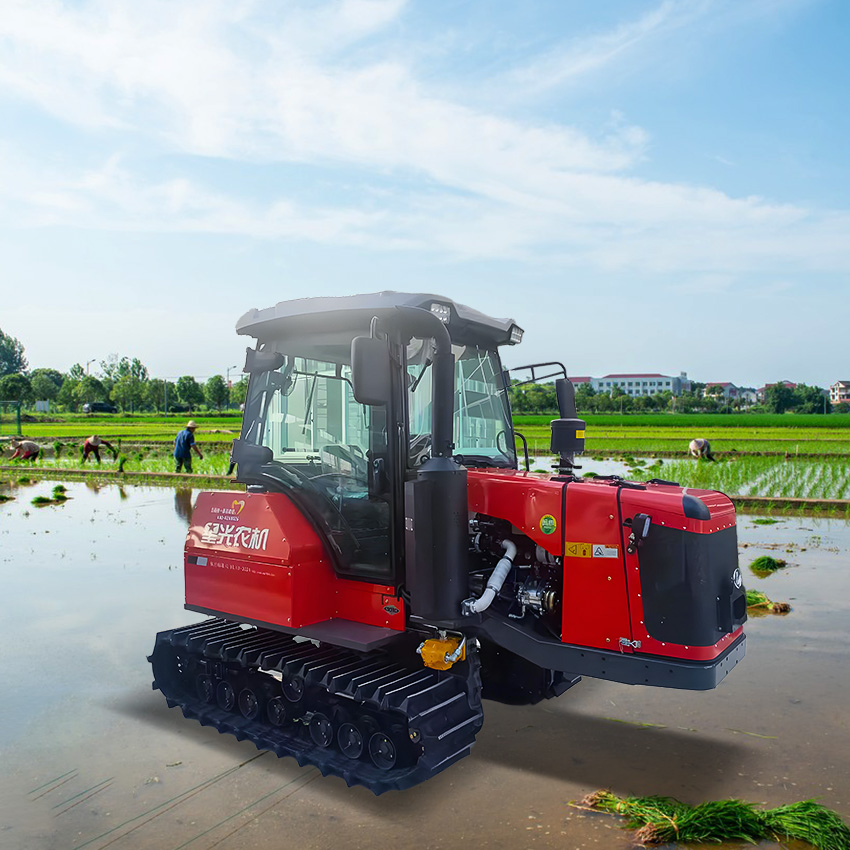
For an example of agricultural tracked equipment, see the Thinker Agri XG1002-B Crawler Tractor.
Factor | Rubber Tracks | Steel Tracks |
|---|---|---|
Common applications | Agriculture, landscaping, and work near sensitive surfaces | Heavy-duty work on rough or abrasive terrain |
Ground protection | Generally less likely to scratch paved surfaces or damage turf | Can mark paved surfaces and disturb soil more aggressively |
Traction | Good performance in many soft-soil and agricultural conditions | Strong grip in suitable rough-ground applications |
Wear resistance | Can be vulnerable to cuts, tears, and abrasive wear | Generally resistant to cuts and punctures, but components can bend or break |
Noise and vibration | Usually quieter and better at absorbing vibration | Usually noisier and may transmit more vibration |
Maintenance | Inspect for cuts, cracking, tension, and alignment | Inspect links, track shoes, pins, bushings, tension, and alignment |
Cost considerations | Replacement frequency depends on use and ground conditions | Initial and repair costs depend on track design and component damage |
These are general differences. Actual performance and cost depend on the machine design, track specifications, ground conditions, and maintenance practices.
Tires perform well on firm ground and often support faster travel between work areas. On soft, wet, or uneven soil, however, tires may slip or sink when ground pressure exceeds the soil’s ability to support the machine.
Tracks create a longer ground-contact area and can distribute machine weight over a wider footprint. This can reduce ground pressure and improve traction in muddy fields or loose soil. Performance still depends on machine weight, track width, soil moisture, tread design, and operating technique.
For a broader comparison, read Thinker Agri’s guide to crawler tractors vs wheel tractors.
Rubber tracks are often suitable for agricultural work and applications where surface protection matters.
Less surface damage: Rubber treads are generally less likely to scratch paved surfaces than exposed steel track shoes.
Reduced noise: Rubber can cushion contact with the ground and reduce track noise.
Shock absorption: Rubber can help reduce vibration during operation.
Suitable for many soft-soil applications: Rubber tracks can provide useful traction in wet fields and on loose or uneven agricultural ground.
Rubber tracks can suffer cuts, tears, cracking, and wear when exposed to sharp stones or abrasive surfaces. Their service life depends on track quality, tension, alignment, operating habits, and the amount of time spent on hard ground.
Before choosing rubber tracks, consider whether your work involves frequent travel over concrete, gravel, sharp debris, or other abrasive materials.
Steel tracks are commonly selected for demanding work where resistance to cuts and abrasion is important.
Resistance to cuts and punctures: Steel components are less vulnerable to the types of tearing that affect rubber.
Heavy-duty construction: Suitable steel track systems can handle demanding applications when correctly matched to the machine.
Ground engagement: Track shoes and grousers can provide strong traction on suitable rough or loose surfaces.
Steel tracks can damage asphalt, concrete, turf, and other sensitive surfaces. They also tend to create more noise and vibration than rubber tracks.
Steel components still require regular inspection. Worn pins, bushings, links, track shoes, and sprockets can increase repair costs or affect machine performance. Track tension and lubrication requirements vary by design, so follow the equipment manufacturer’s maintenance instructions.
The purchase price alone does not determine which track type offers better value. Compare the total cost of ownership over the expected service period.
Consider these factors:
Initial purchase price: Compare complete track systems with equivalent specifications and machine compatibility.
Replacement frequency: Rubber tracks may wear faster in abrasive conditions, while steel tracks can also require costly repairs when components are damaged.
Maintenance labor: Account for inspection time, adjustment requirements, and access to replacement parts.
Downtime: Consider how quickly tracks and undercarriage components can be serviced or replaced.
Surface restoration: Steel tracks may increase repair work when machines operate on paved or landscaped surfaces.
Operating conditions: Soil type, travel distance, load, speed, and turning habits affect wear and operating costs.
Fuel consumption should also be evaluated under comparable working conditions. It depends on machine weight, engine load, traction, slippage, terrain, and operating speed. Do not assume that one track material always uses less fuel.
Use your most common and most demanding working conditions to guide the decision.
You work in wet agricultural fields or on soft soil.
You need to reduce marking on turf or paved surfaces.
Noise and vibration are important considerations.
Your operating conditions do not expose the tracks to excessive sharp or abrasive materials.
Your work involves rough ground or frequent exposure to sharp debris.
Resistance to cuts and punctures is a priority.
The machine is designed for the selected steel track system.
Surface marking, noise, and vibration are acceptable for the job site.
For agricultural applications, also consider soil moisture, track width, machine weight, implement requirements, and the amount of road travel. See the Thinker Agri Agricultural Crawler Tractor Buying Guide for additional selection considerations.
Correct maintenance helps reduce premature wear and unexpected downtime.
Inspect tracks regularly for damage, uneven wear, and alignment issues.
Check track tension according to the equipment manual.
Remove mud, stones, and debris that could interfere with the undercarriage.
Inspect steel track links, shoes, pins, bushings, and sprockets for wear or damage.
Check rubber tracks for cuts, cracks, exposed reinforcement, or separation.
Avoid unnecessary sharp turns and prolonged operation on unsuitable surfaces.
Keep maintenance records to identify recurring wear patterns.
The appropriate inspection interval and adjustment procedure depend on the machine and track system. Always follow the manufacturer’s instructions.
Rubber tracks and steel tracks serve different operating needs. Rubber tracks are often a practical choice when noise reduction and surface protection matter. Steel tracks can be suitable for demanding conditions where resistance to cuts and abrasion is important.
Before making a decision, compare terrain, machine compatibility, maintenance needs, replacement costs, and surface requirements. Matching the track system to the actual job helps support reliable operation and control long-term costs.
Rubber tracks generally offer quieter operation and better protection for sensitive surfaces. Steel tracks provide strong resistance to cuts and abrasion in suitable heavy-duty applications.
They can perform well in many soft or wet agricultural conditions. Actual performance depends on track width, machine weight, soil conditions, and tread design.
Steel components can resist cuts and abrasion well, but service life depends on the track design, operating surface, maintenance, and workload. Neither type lasts longer in every application.
Not always. Rubber track repairs and replacements depend on damage and operating conditions. Steel track systems also incur costs from wear, adjustment, and component replacement.
Start with the terrain, surface-protection needs, expected workload, and machine specifications. Then compare service life, maintenance requirements, replacement costs, and local parts availability.