


T: +86-18367823571
E: lyy@xg1688.cn
E: lyy@xg1688.cn
Building 2, No. 84, Qingxi Dongfeng Road, Qingxi Town, Dongguan City, Guangdong Province, 523642, China

Views: 0 Author: Site Editor Publish Time: 2026-01-12 Origin: Site
Tractor choice plays a major role in how efficiently a farm operates, how much it costs to run, and how reliable daily work becomes. In this guide to The Top 5 Tractor Manufacturers in the United States, we break down the brands American farmers trust most, from large row crop operations to diversified family farms. You’ll learn how leading U.S. tractor brands compare in reliability, technology, applications, and total ownership cost, helping you choose the right tractor for your farming needs.
When identifying the top tractor manufacturers in the United States, we look beyond brand recognition or advertising reach. We focus on how each manufacturer performs in real U.S. farming environments, across different regions, farm sizes, and applications. The goal is to highlight tractor brands that deliver long-term value, not just short-term appeal.
| Evaluation Factor | Why It Matters to U.S. Farmers |
|---|---|
| Market Share | Signals trust and long-term stability |
| Reliability | Keeps tractors working during peak seasons |
| Dealer Support | Reduces downtime and repair delays |
| Technology | Improves efficiency and precision |
| Model Range | Fits diverse farm sizes and uses |
| Ownership Cost | Impacts profitability over time |
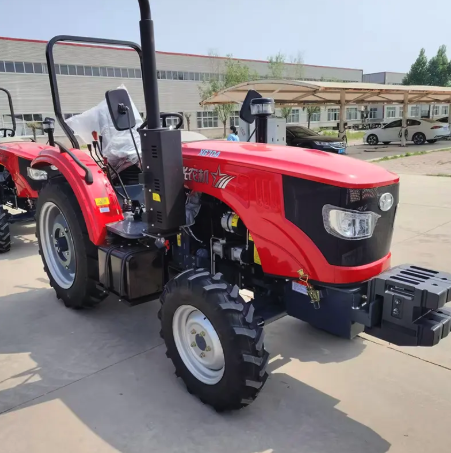
John Deere has long been considered the benchmark for tractors in the United States. For many farmers, it represents consistency, reliability, and familiarity built over generations of use. You will find John Deere equipment operating on everything from small family farms to large commercial row crop operations.
Founded in 1837, John Deere grew alongside American agriculture as farming methods evolved from animal-powered tools to advanced mechanized systems. Over time, the brand played a major role in shaping modern farming practices by introducing equipment designed for efficiency, scale, and long working hours. Its long history in the U.S. market helps explain why the brand remains deeply trusted today.
One of John Deere’s strongest advantages is its leadership in precision agriculture. Technologies such as AutoTrac and JDLink allow operators to improve accuracy, reduce fuel waste, and monitor equipment performance in real time. These tools help farmers work smarter, especially during tight planting and harvesting windows.
Durability is another defining strength. John Deere tractors are known for solid frames, dependable drivetrains, and long service life under demanding conditions. Many older models remain in daily use, which supports the brand’s strong resale value. Buyers often pay a premium for used John Deere machines because they trust what they are getting.
Key strengths include:
Advanced precision farming systems used across the industry
Proven long-term durability in diverse field conditions
Strong brand loyalty and consistently high resale value
John Deere offers one of the broadest tractor lineups in the U.S. market, covering nearly every agricultural application. Compact tractors serve small farms, property owners, and specialty operations, handling mowing, light tillage, and loader work. Utility tractors are common on mixed-use farms where versatility matters most, supporting hay production, livestock chores, and general farm maintenance.
For large-scale operations, John Deere’s high-horsepower row crop and 4WD tractors are designed for heavy tillage, planting, and long hours in the field. These machines focus on power, traction, and operator comfort for maximum productivity.
| Tractor Category | Typical Applications |
|---|---|
| Compact Tractors | Property care, landscaping, light farm work |
| Utility Tractors | Hay, livestock, loader operations |
| Row Crop / 4WD | Large-scale planting and tillage |
Case IH is widely recognized across the United States for tractors built to handle demanding field conditions. Many large-acreage farms rely on it for consistent power, modern technology, and operator-focused design. When scale matters, they often look here.
Case IH operates under the CNH Industrial group, sharing engineering resources and global manufacturing expertise. Its roots run deep in North American agriculture, especially in row crop regions where productivity and uptime matter every season. Over the years, it has become closely associated with high-horsepower tractors used in corn, soybean, and wheat production.
In the U.S., Case IH maintains a strong footprint across the Midwest and Plains states. Dealers and service centers remain tightly connected to commercial farming communities, supporting equipment used for long working days and heavy soil conditions.
Case IH places a strong focus on precision farming and machine efficiency. The AFS precision farming platform allows operators to manage guidance, data collection, and machine performance from a single interface. It helps reduce overlap, save fuel, and improve overall field accuracy.
Transmission options also stand out. CVT and advanced power-shift systems provide smooth power delivery, especially under varying loads. Engines are designed for strong torque at lower RPMs, which supports fuel efficiency during heavy tillage or planting.
Performance highlights include:
Integrated AFS guidance and farm data tools
Smooth CVT options for consistent power delivery
Strong torque output for demanding field operations
Case IH offers tractors suited for different farm sizes and workloads. The Farmall Series targets small and mid-sized farms, covering chores such as loader work, hay handling, and light field tasks. These models balance power, simplicity, and affordability.
For larger operations, the Magnum and Steiger Series are central to the brand’s reputation. Magnum tractors serve row crop farms needing versatility and high horsepower, while Steiger models focus on extreme traction and pulling power for large-acreage farming.
| Series | Best Use Case |
|---|---|
| Farmall | Small farms, utility tasks, mixed operations |
| Magnum | Row crop farming, planting, heavy tillage |
| Steiger | Large-acreage, high-draft field work |
New Holland attracts farmers who want flexible machines and a comfortable workday. Across the United States, it often appears on dairy farms, hay operations, and diversified acreage. Many choose it for balanced performance rather than raw horsepower alone.
New Holland has American roots and a long presence in U.S. agriculture, later expanding into a global brand under CNH Industrial. Its equipment gained strong adoption in regions where mixed farming dominates. Dairy producers, hay growers, and livestock farms often rely on it for daily chores and seasonal field work.
In the U.S. market, New Holland positions itself as a practical option for farms running many different tasks. It fits operations needing one tractor to handle feeding, mowing, baling, and light tillage throughout the year.
New Holland places strong emphasis on cleaner operation and future-ready design. EcoBlue SCR technology helps reduce emissions while maintaining fuel efficiency. Operators see lower fuel use during long working hours, especially in loader and PTO-driven applications.
The brand also explores alternative fuel concepts, including methane and electric tractor designs. These ideas target farms interested in sustainability and long-term energy savings. While not every model uses alternative fuel today, the direction appeals to environmentally focused producers.
Environmental highlights include:
EcoBlue SCR systems for lower emissions
Improved fuel efficiency during daily operations
Ongoing development of alternative energy tractors
New Holland offers a wide lineup designed around versatility. Compact and utility tractors handle property maintenance, loader work, and small livestock operations. These machines suit farms needing easy operation and tight turning radius.
Mid-range tractors serve diversified farms running hay equipment, planters, and spreaders. They balance power and comfort for long days. High-horsepower models support demanding tasks such as tillage and large planting operations, especially where productivity matters.
| Tractor Category | Common Applications |
|---|---|
| Compact / Utility | Chores, livestock, light field work |
| Mid-Range | Hay, planting, mixed farming |
| High-Horsepower | Tillage, large implements |
Kubota entered the U.S. market decades ago, starting small and growing steadily. They focused early on compact tractors, which many American brands overlooked at the time. Homeowners, landscapers, and small farm operators quickly noticed the difference.
Today, it runs manufacturing plants in states like Georgia and Kansas. This local production helps shorten delivery times and supports dealer networks nationwide. They now hold a strong position across rural properties, livestock farms, and non-commercial agricultural spaces.
Kubota tractors feel purpose-built for tight spaces and mixed jobs. They turn easily, park simply, and work well around barns or fencing.
Key advantages users often point out include:
Compact frames, easy navigation in confined areas
Engines known for long service life
Lower routine maintenance demands
Pricing accessible for first-time buyers
They focus on practical features. You won’t see excessive electronics. Many operators appreciate controls they can learn fast.
Kubota’s lineup stays clear and easy to understand. Each series targets a specific type of user.
BX Series
Designed for homeowners and light-duty land care. Ideal for mowing, snow removal, and small property maintenance.
L Series
Utility-focused models for fencing, loader work, and livestock chores. Popular among small farms and rural businesses.
M Series
Larger frames and more horsepower. Suitable for professional operations handling hay, spraying, and heavier implements.
| Series | Typical Users | Primary Tasks |
|---|---|---|
| BX | Homeowners | Mowing, landscaping |
| L | Small farms | Loader work, chores |
| M | Professionals | Hay, tillage, spraying |
Massey Ferguson appeals to farmers who want straightforward machines and predictable ownership costs. Across the United States, many see it as a brand focused on work first, flash second. It fits operations where uptime and simplicity matter every day.
Massey Ferguson carries a long history in global agriculture, earning trust across different climates and farm sizes. Over time, it became part of the AGCO group, gaining access to shared engineering, manufacturing, and dealer resources. This connection helps it stay competitive while keeping its traditional, no-nonsense identity.
In the U.S. market, the brand often attracts growers who prefer proven designs and easy service access. They value machines built for long seasons and repeated use.
Massey Ferguson focuses on rugged construction and simple engineering. Controls feel familiar, and systems stay easy to understand. Many owners appreciate fewer electronics compared to premium brands, reducing downtime and repair stress.
Fuel efficiency remains another strength. Engines deliver steady power while keeping operating costs under control. Maintenance stays straightforward, helping farms manage service work without specialized tools.
Key strengths include:
Simple, durable mechanical design
Fuel-efficient engines for daily use
Practical technology, not overloaded systems
The lineup covers a wide range of farming needs. Entry-level and utility tractors support chores, loader work, and small-acreage operations. They suit livestock farms and property owners needing reliable machines.
Mid-range global series tractors handle mixed farming tasks such as planting, mowing, and baling. High-horsepower models support commercial farms running large implements during peak seasons.
| Tractor Segment | Typical Use |
|---|---|
| Entry / Utility | Livestock, chores, small farms |
| Mid-Range Global | Mixed farming, hay, planting |
| High-Horsepower | Large-scale commercial operations |
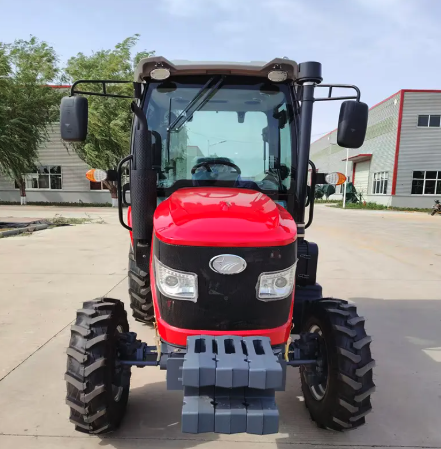
John Deere holds a leading position because of its long history in American agriculture, extensive dealer support, advanced precision farming technology, and consistently high resale value. Many farmers trust it for long-term ownership and large-scale operations.
Case IH tractors are especially popular among large-acreage and row crop farms. Their high-horsepower models, strong torque output, and AFS precision systems make them well-suited for heavy tillage, planting, and commercial-scale workloads.
New Holland tractors work well for dairy farms, hay producers, and mixed-use operations. Their focus on comfort, fuel efficiency, and versatility makes them a practical choice for farms handling multiple tasks throughout the year.
Massey Ferguson tractors are often chosen for their durability, simple design, and lower total cost of ownership. They appeal to farmers who want reliable performance without complex electronics or premium pricing.
Choosing the right tractor brand is really about matching power, comfort, and technology to how you farm every day. Some growers need raw pulling strength, others want versatility, lower fuel use, or simpler maintenance. By understanding how leading U.S. manufacturers differ, you can narrow options faster and focus on what truly improves productivity on your land.
At Thinker Agricultural Machinery Co., Ltd., we work closely with farmers and dealers to supply reliable tractor solutions and practical equipment support worldwide. If you’re plann


