T: +86-18367823571
E: lyy@xg1688.cn
E: lyy@xg1688.cn
Building 2, No. 84, Qingxi Dongfeng Road, Qingxi Town, Dongguan City, Guangdong Province, 523642, China

Views: 0 Author: Site Editor Publish Time: 2026-01-09 Origin: Site
A combine harvester works by completing several harvesting operations in one continuous process. As it moves through the field, the header cuts and gathers the crop, the feeder house transfers it into the threshing system, and the drum or rotor separates the grain from the stalks. Sieves and airflow then remove chaff and other impurities before the clean grain enters the grain tank. By combining reaping, threshing and winnowing, a combine harvester significantly reduces harvesting time, labor requirements and grain loss.
A combine harvester is a powerful agricultural machine used to harvest grain crops in a fast and efficient way. Instead of relying on multiple tools or large groups of workers, farmers use it to complete several harvesting tasks at once. It moves through the field, cuts crops, separates grain, and cleans it in one continuous process. This makes harvesting quicker, more consistent, and far less physically demanding.
The name combine comes from the fact that the machine combines three key harvesting operations:
Reaping – cutting crops from the field
Threshing – separating grain from stalks and husks
Winnowing – cleaning grain by removing chaff and debris
In traditional farming, these steps were done separately, often by hand or using different machines. Here, they happen inside one system, as the crop moves through the combine.
Combine harvesters are designed mainly for grain and seed crops. By changing headers or adjusting settings, farmers can harvest many crop types using the same machine.
Common crops include:
Wheat
Rice
Corn (maize)
Barley
Oats
Soybeans
In rice-growing regions, farmers often use rice combine harvesters. They are built to work in wet, muddy fields and handle fragile rice grains gently.
The difference between traditional harvesting and combine harvesting is dramatic. The table below shows how they compare in real farming conditions.
| Aspect | Traditional Harvesting | Combine Harvester |
|---|---|---|
| Tools used | Sickles, threshers, winnowing baskets | One integrated machine |
| Labor required | High, many workers | Very low, 1–2 operators |
| Time needed | Several days per field | Few hours per field |
| Grain loss | Higher, less controlled | Lower, more precise |
| Grain cleanliness | Inconsistent | Cleaner and uniform |
Traditional methods depend heavily on manual effort and weather conditions. Combine harvesting relies on mechanical precision, steady operation, and controlled airflow. Because of this, many farms now depend on combines for large-scale grain production.
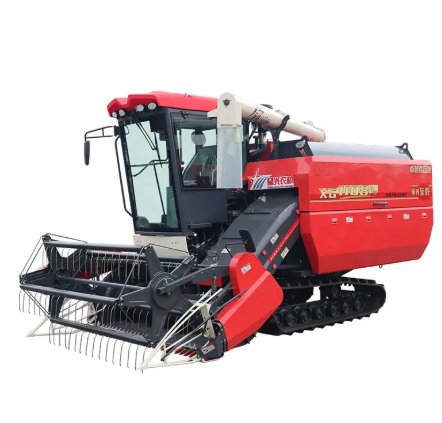
A combine harvester cuts, threshes, separates and cleans grain crops during a single pass through the field. Its main purpose is to collect mature crops efficiently while reducing manual labor, harvesting time and grain loss.
The machine performs three traditional harvesting operations:
Reaping: Cuts and gathers the standing crop.
Threshing: Separates grain kernels from stalks, husks or seed heads.
Winnowing: Uses sieves and airflow to remove chaff and impurities.
After cleaning, the grain moves into an onboard tank and is discharged through an unloading auger into a trailer or truck. Depending on the header and machine settings, a combine harvester can process rice, wheat, corn, barley, oats and soybeans.
A combine harvester works by integrating three essential harvesting operations into a single machine: reaping, threshing, and winnowing.
As the machine moves through the field, standing crops are cut by the header and transferred through the feeder house into the threshing system. The threshing mechanism separates grain from stalks and husks, while the cleaning system removes chaff and lightweight debris using airflow and sieves. Finally, clean grain is transported into the grain tank for storage before unloading.
This continuous harvesting process allows a combine harvester to complete multiple operations simultaneously, significantly improving harvesting efficiency and reducing labor requirements compared to traditional harvesting methods.
A combine harvester may look complicated, but every component has a clear purpose. They work together as one system, helping the machine cut crops, separate grain, clean it, and store it efficiently while moving across the field.
| Main System | Function |
|---|---|
| Header | Cuts and gathers the standing crop |
| Feeder House | Transfers crop material into the machine |
| Threshing System | Separates grain from stalks and husks |
| Separation System | Recovers grain remaining in the straw |
| Cleaning System | Removes chaff using sieves and airflow |
| Grain Tank | Temporarily stores clean grain |
| Unloading Auger | Transfers grain into a trailer or truck |
For a detailed explanation of each component, see our guide to the parts of a combine harvester and their functions.
| Harvesting Stage | Function |
|---|---|
| Cutting | Header cuts standing crops |
| Feeding | Feeder house transports crops |
| Threshing | Grain separated from straw |
| Separation | Remaining grain recovered |
| Cleaning | Chaff and debris removed |
| Storage | Grain stored in grain tank |
| Unloading | Grain transferred to trailers |
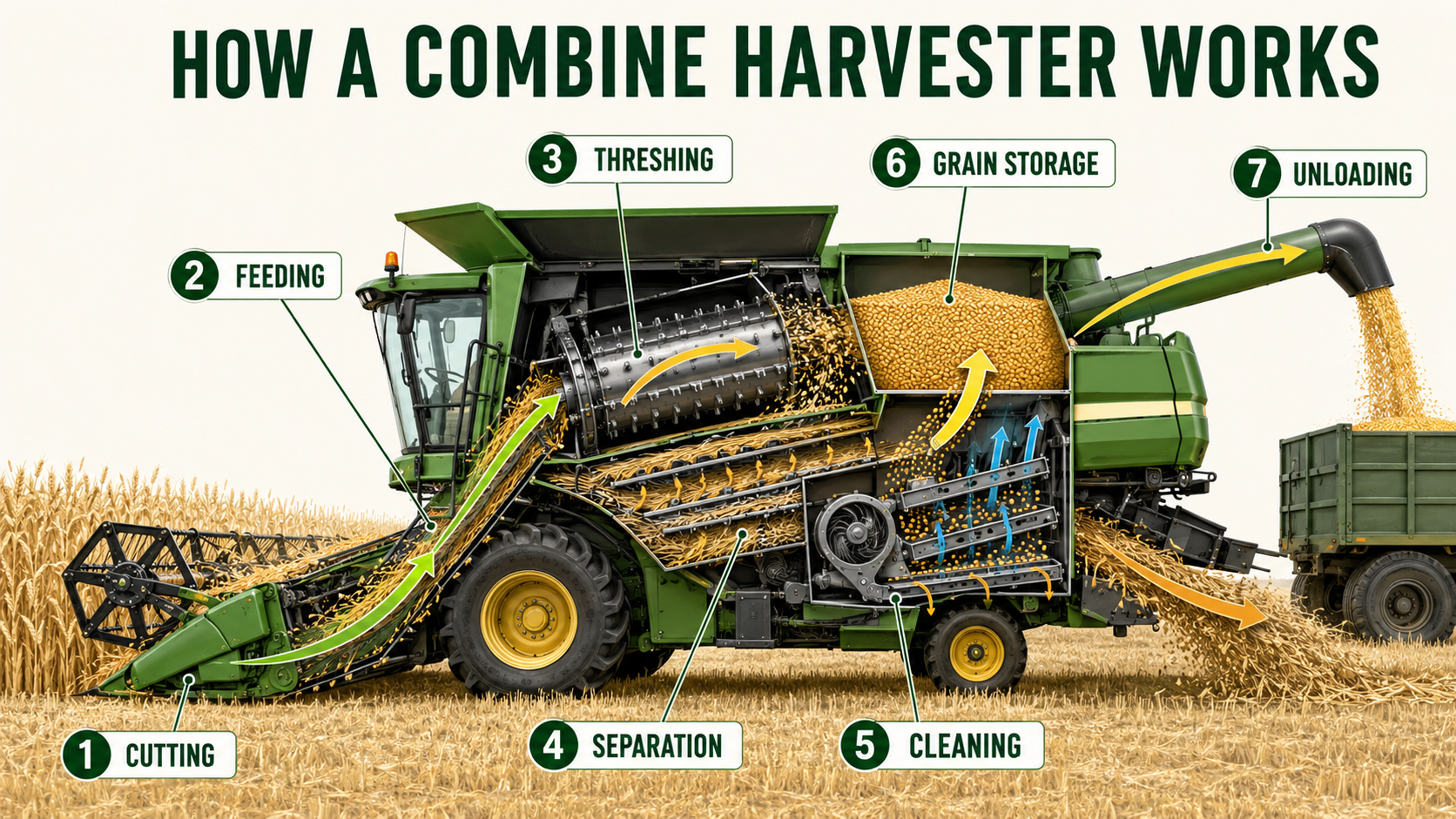
A combine harvester completes several jobs in one smooth flow. As it moves forward, crops enter the machine and leave as clean grain. Each step depends on the one before it, so timing and balance matter.
The process starts at the header, positioned at the front of the combine. It cuts standing crops close to the ground and guides them inward. Different headers suit different crops, but the goal stays the same—clean cutting and steady intake.
The reel rotates above the cutter bar. It pulls plants toward the blades and keeps them upright. Below it, the cutter bar slices stems quickly and evenly. Together, they prevent crops from falling forward or missing the cut.
Once cut, crops move into the feeder house. This channel lifts material from the header into the main body of the combine. A steady flow matters here. If feeding becomes uneven, blockages happen and efficiency drops.
They design feeder systems to grip crops firmly and move them at a controlled speed. Good feeding protects grain and keeps internal systems running smoothly.
Threshing separates grain from stalks and husks. Inside the combine, crops reach the threshing drum or cylinder. It spins and strikes the material gently, loosening kernels without crushing them.
Grain falls downward through openings, while straw moves ahead. Operators adjust speed and spacing to match crop conditions. Proper settings reduce grain cracking and improve recovery.
Some grain still clings to straw after threshing. The separation system handles this stage. Traditional machines use straw walkers, which shake straw as it moves backward. Rotary combines use spinning rotors instead.
Any unthreshed grain returns for another pass. This recycling step reduces losses and improves total yield, especially in heavy crops.
Grain then enters the cleaning area. Sieves shake material by size and weight, while a strong fan pushes air upward. Light chaff lifts away. Heavier grain drops through.
This airflow and sieve action removes dust, husks, and broken plant pieces. Clean grain matters for storage and market value.
Clean grain moves through internal augers into the grain tank. Sensors often monitor fill levels, so operators know when unloading becomes necessary.
When ready, they extend the unloading auger. Grain transfers directly into trucks or trailers while harvesting continues.
| Process Stage | Main Purpose | Result |
|---|---|---|
| Cutting | Remove crops from field | Even crop intake |
| Threshing | Free grain from plants | Loose kernels |
| Separation | Recover remaining grain | Reduced losses |
| Cleaning | Remove chaff | Clean grain |
| Storage | Hold grain temporarily | Continuous operation |
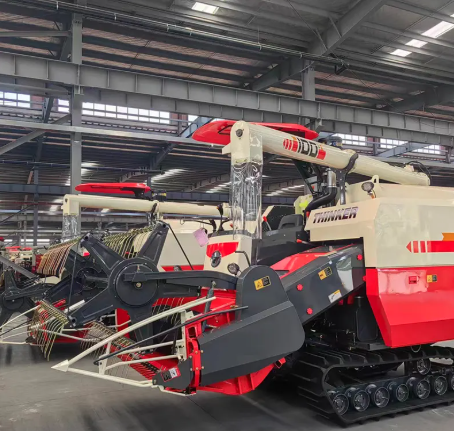
The threshing and separation systems work together to separate grain from straw.
During threshing, the rotating drum and concave loosen kernels from crop heads through controlled impact and friction. However, some grain may remain attached to the straw.
The separation system then recovers any remaining kernels using straw walkers or rotary separators. As straw moves toward the rear of the machine, grain falls through collection channels and enters the cleaning system.
This multi-stage process helps maximize grain recovery while minimizing losses during harvesting.
The basic combine harvesting process remains similar across crops, but the header type, drum or rotor speed, concave clearance and airflow settings must be adjusted to suit different grain characteristics.
| Crop | Recommended Header | Key Operating Considerations |
|---|---|---|
| Rice | Rice or tracked combine header | Wet fields, delicate grain and reduced ground pressure |
| Wheat | Grain header | Even cutting, steady feeding and controlled threshing |
| Corn | Corn header | Ear separation, larger concave clearance and kernel protection |
| Soybeans | Flexible header | Low cutting height and reduced pod loss |
| Barley | Grain header | Gentle threshing to limit broken grain |
Using the correct header and operating settings helps reduce grain damage, prevent blockages and improve harvesting efficiency.
Proper maintenance and safe operation keep a combine harvester efficient during harvest season. Simple daily habits reduce downtime and lower the risk of accidents in the field.
Daily inspections help operators spot wear early. They usually check belts, chains, header knives, reels, tires or tracks, and the grain tank area. Lubrication keeps moving parts smooth, while regular cleaning removes dust, straw, and residue around the engine and threshing system. It also helps prevent overheating and fire risks during long working hours.
Blockages often happen when crops feed unevenly. Operators slow down and inspect the feeder house after shutting the machine off. Grain loss usually comes from incorrect threshing, fan, or sieve settings, so adjustments restore efficiency. Engine or hydraulic issues often link to clogged filters, leaks, or low fluid levels, causing slow response or overheating if ignored.
Operators protect themselves by wearing fitted clothing, gloves during maintenance, and eye protection while cleaning. Safe operation means shutting down the combine before servicing, using handrails when climbing, keeping others clear of moving parts, and staying alert during long shifts. These habits reduce injuries and keep harvesting smooth and controlled.
Understanding how a combine harvester works is important, but selecting the right machine for your crop type and field conditions is equally critical. Thinker Agricultural Machinery offers several combine harvester solutions designed for different harvesting requirements.
| Harvesting Requirement | Recommended Model |
|---|---|
| Rice & Wet Fields | 4LZ-6.0Z |
| Maximum Threshing Efficiency | 4LZ-4.0S / 4LL-2.0D |
| Large-Scale Grain Harvesting | 4LZ-7.0Z |
Explore More Combine Harvester SolutionsWhether you need a tracked combine for rice harvesting, a double-drum harvester for improved grain separation, or a high-capacity machine for commercial farming, Thinker Agricultural Machinery provides reliable harvesting solutions designed to improve productivity and reduce grain loss. |
A combine harvester cuts crops, separates grain from stalks, removes chaff and temporarily stores the clean grain. It combines reaping, threshing and winnowing into one continuous harvesting process.
A combine harvester uses a header to cut and gather crops before sending them through the feeder house. The threshing and separation systems remove grain from the stalks, while sieves and airflow clean the grain before it enters the grain tank.
The threshing and separation systems work together to remove grain from crop stalks. The threshing drum loosens the grain, while straw walkers or rotary separators recover any remaining grain before the straw exits the machine.
The main components include the header, feeder house, threshing drum, concave, separation system, cleaning sieves, grain tank, unloading auger, engine, transmission system, and operator cabin.
A combine harvester combines three harvesting processes into one machine:
Reaping
Threshing
Winnowing
This is the reason it is called a "combine" harvester.
After threshing, grain passes through a cleaning system consisting of sieves and a fan. Airflow removes lightweight chaff while the sieves separate impurities, leaving clean grain ready for storage.
Yes. Modern combine harvesters can harvest multiple crop types, including rice, wheat, corn, barley, soybeans, and oats. Different headers and machine settings allow operators to adapt the combine to various harvesting conditions.
Tracked combine harvesters provide better traction and lower ground pressure in muddy or wet fields, while wheeled combines offer higher travel speeds and are suitable for dry and firm ground conditions.
A combine harvester is more than just a large machine rolling through a field. It is a carefully coordinated system where cutting, threshing, separating, and cleaning happen in one continuous flow. Once you understand how each part works together, it becomes clear why combines save time, reduce grain loss, and support large-scale modern farming. Knowing this process also helps operators make better adjustments in real field conditions.
At Thinker Agricultural Machinery Co., Ltd., we focus on building reliable combine harvesters designed for efficiency, durability, and real farming needs. If you are looking to improve harvest performance or explore advanced harvesting solutions, our team is ready to support your next step in the field.