


T: +86-18367823571
E: lyy@xg1688.cn
E: lyy@xg1688.cn
Building 2, No. 84, Qingxi Dongfeng Road, Qingxi Town, Dongguan City, Guangdong Province, 523642, China

Views: 0 Author: Site Editor Publish Time: 2026-01-09 Origin: Site
In today’s rapidly evolving agricultural landscape, farm equipment has become more than just a convenience—it is the backbone of modern farming. From tractors to precision planters, the right machinery allows farmers to increase efficiency, improve yields, and embrace sustainable practices. Understanding the top 10 most used farm equipment is essential for anyone looking to optimize their farm operations, whether you manage crops, livestock, or mixed agricultural activities.
Using the right farm equipment brings numerous benefits:
Increased Productivity: Machines perform tasks faster and more accurately than manual labor.
Labor Savings: Automation reduces reliance on a large workforce.
Enhanced Crop Quality: Precision tools help maintain optimal planting, watering, and fertilization.
Sustainability: Modern machinery promotes resource efficiency and reduces environmental impact.
Different farms—grain, dairy, vegetable, or poultry—require specialized farm equipment. For example, a combine harvester may be critical for a wheat farm, while a robotic milking system is essential for a dairy operation.
Tractors are the most versatile and widely used farm equipment, serving as the central hub for multiple farm operations. They can pull plows, cultivators, seeders, and trailers, while also powering hydraulic and PTO-driven implements.
Modern Features & Innovations:
GPS-Guided Precision Farming: Modern tractors use GPS and GIS technology to ensure precise plowing, planting, and fertilization. This reduces overlaps and minimizes input waste.
Fuel Efficiency & Emissions Reduction: Advanced engine designs and hybrid models decrease fuel consumption by up to 20%, cutting operational costs and environmental impact.
Automation & Smart Features: Tractors now offer auto-steering, real-time soil monitoring, and telematics for predictive maintenance.
Applications:
Row-crop planting and harvesting.
Towing wagons, trailers, and livestock transport equipment.
Powering irrigation pumps and farm machinery with PTO systems.
Benefits: Tractors save time, reduce labor requirements, and provide a platform for integrating cutting-edge agricultural technology.
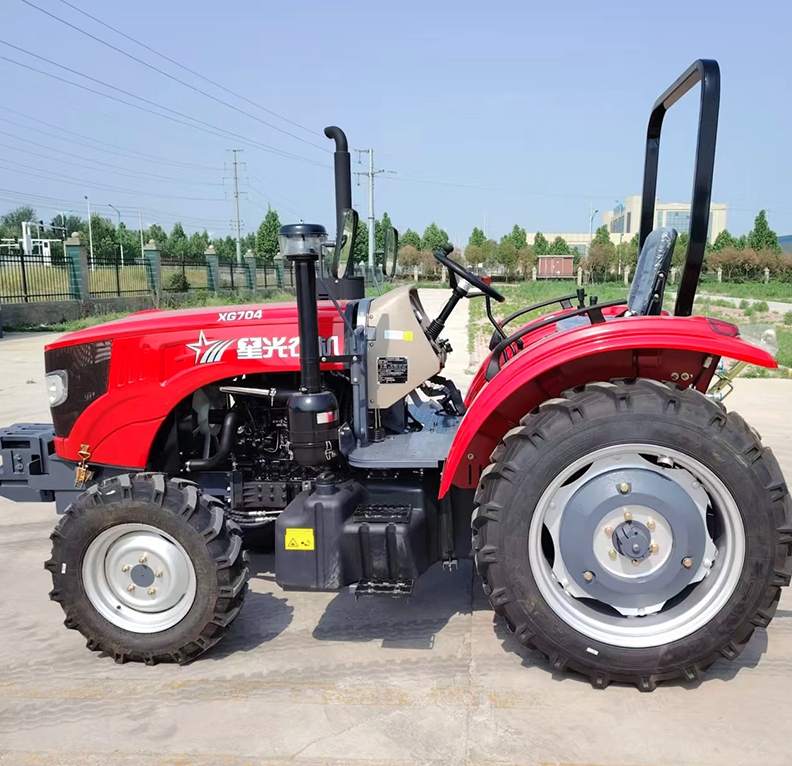
Plows are fundamental farm equipment used to turn, aerate, and prepare soil before planting. A well-prepared seedbed ensures better water infiltration, nutrient distribution, and root growth.
Types & Uses:
Moldboard Plows: Flip soil completely, burying crop residues and weeds. Ideal for traditional farming systems.
Chisel Plows: Penetrate deep soil layers without full inversion, preserving soil structure while breaking compaction.
Subsoilers: Reach up to 20 inches deep, breaking hardpan layers and improving drainage and root penetration.
Benefits:
Improves soil aeration and moisture retention.
Encourages decomposition of organic matter, enhancing fertility.
Reduces soil compaction, increasing crop resilience and yield.
Plows remain a critical investment for farmers who want a healthy soil ecosystem and sustainable cultivation practices.
Seeders and planters are essential farm equipment for achieving uniform crop growth. Proper seed placement affects germination, plant spacing, and ultimately, yield potential.
Modern Features:
Precision Planting: GPS-guided systems ensure accurate row spacing and seed depth.
Variable Rate Technology (VRT): Adjusts seeding density based on soil fertility and field history.
Automatic Row Shutoff: Prevents double planting and seed wastage.
Seed Singulation: Ensures one seed per drop, reducing competition between plants.
Applications:
Grain crops: wheat, barley, oats.
Row crops: corn, soybeans, cotton.
Vegetable and specialty crops requiring precise spacing.
Benefits: Increased crop uniformity, optimized seed use, reduced input costs, and higher overall yields.
Combine harvesters revolutionize grain harvesting by combining cutting, threshing, and cleaning into one operation.
Modern Enhancements:
Automation: Real-time adjustment of sieves, reel speed, and threshing mechanisms for varying crop conditions.
Modular Headers: Allows harvesting of wheat, corn, barley, and rice using the same base machine.
Data-Driven Insights: Sensors monitor grain loss, moisture content, and yield mapping.
Applications:
Large-scale grain harvesting.
Multi-crop farms with diverse planting schedules.
Farms implementing precision agriculture for data collection.
Benefits: Saves significant labor, reduces harvest time, and increases operational efficiency. Farmers can also use collected data to improve future planting strategies.
Balers compress hay, straw, and forage into compact bales for storage or livestock feed.
Types & Applications:
Round Balers: Produce cylindrical bales ideal for large-scale operations.
Square Balers: Offer uniform bales for easier stacking and transportation.
Mini Balers: Useful for smaller farms or specialized crops.
Modern Features:
Moisture and nutrient sensors maintain feed quality.
Automated wrapping reduces spoilage.
Adjustments for crop density and size increase flexibility.
Benefits: Preserve the nutritional value of feed, minimize waste, and reduce labor in feeding livestock.
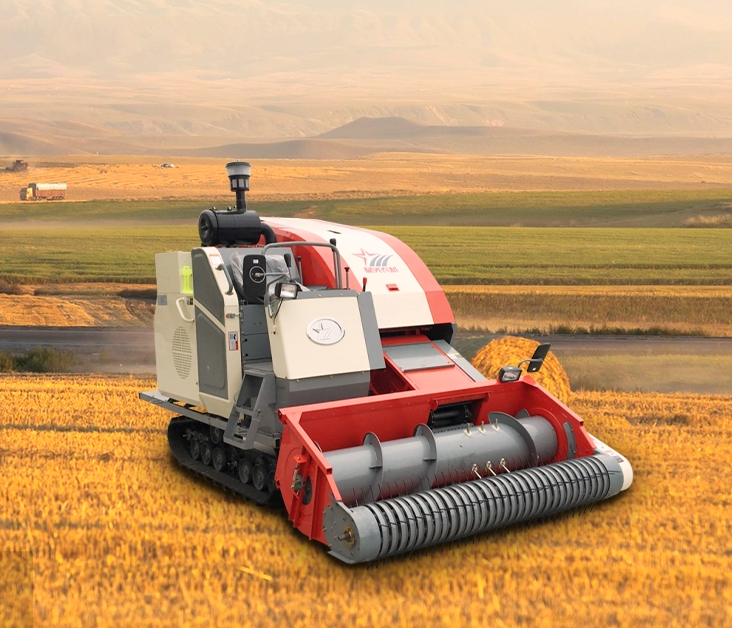
Sprayers are critical farm equipment for protecting crops and ensuring uniform fertilizer application.
Technological Advancements:
GPS-Guided Spraying: Allows precise application in large fields.
Advanced Nozzles: Reduce drift and optimize droplet size for specific chemicals.
Drone Sprayers: Efficiently cover uneven or hard-to-reach terrain.
Applications:
Applying herbicides, insecticides, and fungicides.
Fertilizer distribution for row crops and orchards.
Integrated pest management in precision farming systems.
Benefits: Reduced chemical use, lower operational costs, and minimal environmental impact.
Tillage equipment prepares soil for planting, controls weeds, and improves overall field health.
Types:
Disc Harrows: Cut and mix soil, ideal for breaking clods in clay-heavy soils.
Chain Harrows: Level soil and create a fine seedbed.
Rotary Cultivators (Rotavators): Pulverize soil, incorporate residues, and create uniform seedbeds.
Applications:
Pre-planting soil preparation.
Inter-row weed control.
Soil aeration and mixing of fertilizers or compost.
Benefits: Improves soil health, promotes uniform germination, and supports sustainable tillage practices.
Irrigation systems are a vital farm equipment component for crop health and yield.
Types & Features:
Drip Irrigation: Delivers water directly to plant roots, conserving water.
Center Pivot Systems: Ideal for large-scale fields.
Sprinkler Systems: Evenly distributes water over diverse crops.
Automation adjusts water supply based on soil moisture and weather data.
Applications:
Vegetables, fruits, and row crops.
Greenhouses and high-value crops.
Water-stressed regions requiring precision irrigation.
Benefits: Water efficiency, improved yields, and reduced risk of over- or under-irrigation.
Livestock farms rely on specialized farm equipment to maintain animal health, nutrition, and productivity.
Types & Applications:
Feeders and waterers for automated distribution.
Robotic milking systems and health monitoring devices.
Electronic scales and ID systems for tracking growth and health.
Benefits: Reduces labor, ensures consistent nutrition, improves welfare, and boosts production efficiency.
All-terrain vehicles (ATVs) and utility task vehicles (UTVs) enhance mobility and operational flexibility on farms.
Applications:
Transporting crops, tools, and personnel.
Pulling trailers or carrying small attachments like sprayers and spreaders.
Navigating uneven or hilly terrain.
Benefits: Save time, improve logistics on the farm, and provide a versatile platform for various attachments and tasks.
Tractors provide versatile power for plowing, planting, hauling, and operating PTO-driven equipment, reducing labor and saving time.
The main types are moldboard plows, chisel plows, and subsoilers, each designed to prepare soil differently based on compaction and crop requirements.
Seeders and planters ensure precise seed placement, depth, and spacing, which improves germination, uniformity, and overall yields.
Combine harvesters cut, thresh, and clean crops in one pass, saving labor and time while collecting valuable yield data.
Round balers produce cylindrical bales for large-scale storage, while square balers create uniform, stackable bales suitable for transport and smaller farms.
Mastering the right farm equipment can transform the way you manage your fields, from planting to harvesting. By understanding which machines make the biggest impact, you can streamline operations, save labor, and boost crop quality across every season.
At Thinker Agricultural Machinery Co., Ltd., we provide innovative solutions tailored to modern farms, helping you access tractors, harvesters, sprayers, and more. Explore our equipment lineup today and see how smart tools can make farming more efficient, sustainable, and rewarding.


