


T: +86-18367823571
E: lyy@xg1688.cn
E: lyy@xg1688.cn
Building 2, No. 84, Qingxi Dongfeng Road, Qingxi Town, Dongguan City, Guangdong Province, 523642, China

When most people think of farming, they imagine open fields, tractors, and rows of crops. But in today’s world, farmers are experimenting with unusual farming types that challenge traditional ideas. From skyscraper farms to genetically modified goats, these innovative methods demonstrate how technology, sustainability, and creativity can reshape agriculture.
Whether you’re a farmer exploring new ways to boost yields using modern farm equipment, a foodie curious about where your food comes from, or an investor looking into the future of farming, understanding these methods is essential. This article explores five unusual farming types, their benefits, challenges, and the role they could play in sustainable food production.
Vertical farming is a method of growing crops in stacked layers, often in controlled indoor environments. It’s particularly useful in urban areas, deserts, and regions where land is scarce. By turning vertical space into productive farmland, this method maximizes output while minimizing land use.
Vertical farms rely heavily on modern farm equipment, including automated seeding machines, harvesting robots, LED grow lights, and climate-controlled greenhouses. Crops like leafy greens, herbs, and high-value vegetables can thrive in this setup.
Maximizes production in limited spaces.
Reduces the distance food travels, lowering carbon emissions.
Allows year-round farming regardless of weather conditions.
Integrates automation to reduce labor costs.
High initial investment in farm equipment and infrastructure.
Requires technical knowledge to maintain indoor farming systems.
Energy-intensive due to lighting and climate control.
Vertical farming represents a revolution in farming, blending technology, efficiency, and urban sustainability.
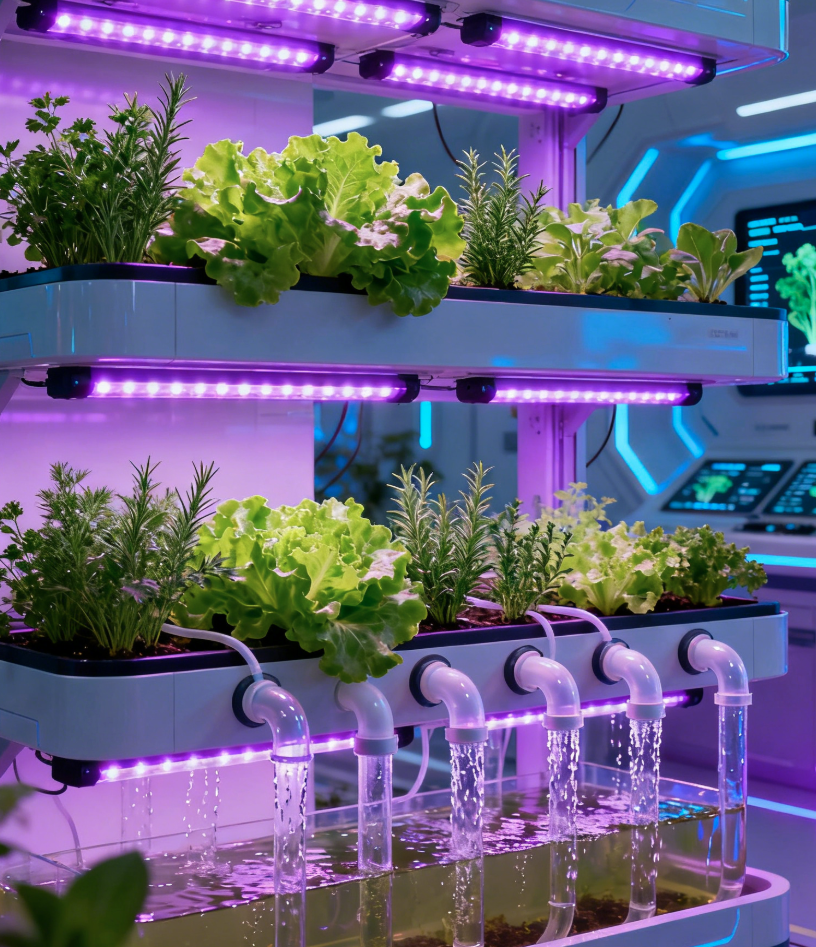
Hydroponics is a soil-free farming method that grows plants in nutrient-rich water. By monitoring nutrient levels, pH, and water flow, farmers can precisely control growth conditions. Hydroponics is often used in vertical farming setups but can also stand alone as a high-yield indoor method.
Nutrient Film Technique (NFT) – plants grow in a thin stream of nutrients.
Deep Water Culture (DWC) – roots suspended in oxygenated nutrient solution.
Ebb and Flow – flooding and draining trays for nutrient absorption.
Drip Irrigation and Wicks – precise nutrient delivery.
High crop yields in small spaces.
Efficient water usage compared to traditional soil farming.
Greater control over farming conditions, reducing disease risk.
Requires specialized farm equipment for monitoring and circulation.
Energy costs for pumps, lighting, and climate control.
Technical expertise needed to maintain nutrient balance.
Hydroponics is ideal for urban farmers and areas with poor soil quality, making it a key component of modern farming innovation.
Aeroponics is an advanced technique where plants grow suspended in air, with roots regularly misted with nutrient solutions. Developed by NASA in the 1990s for space missions, aeroponics uses 90% less water than hydroponics, making it highly sustainable.
Extremely water-efficient.
Faster growth and potentially more nutritious crops.
Reduces soil-borne diseases and pest problems.
Can integrate seamlessly with vertical farming systems.
High setup costs and technical complexity.
Limited adoption outside research or specialty farms.
Aeroponics represents the cutting edge of farming technology, ideal for urban agriculture and water-scarce regions.
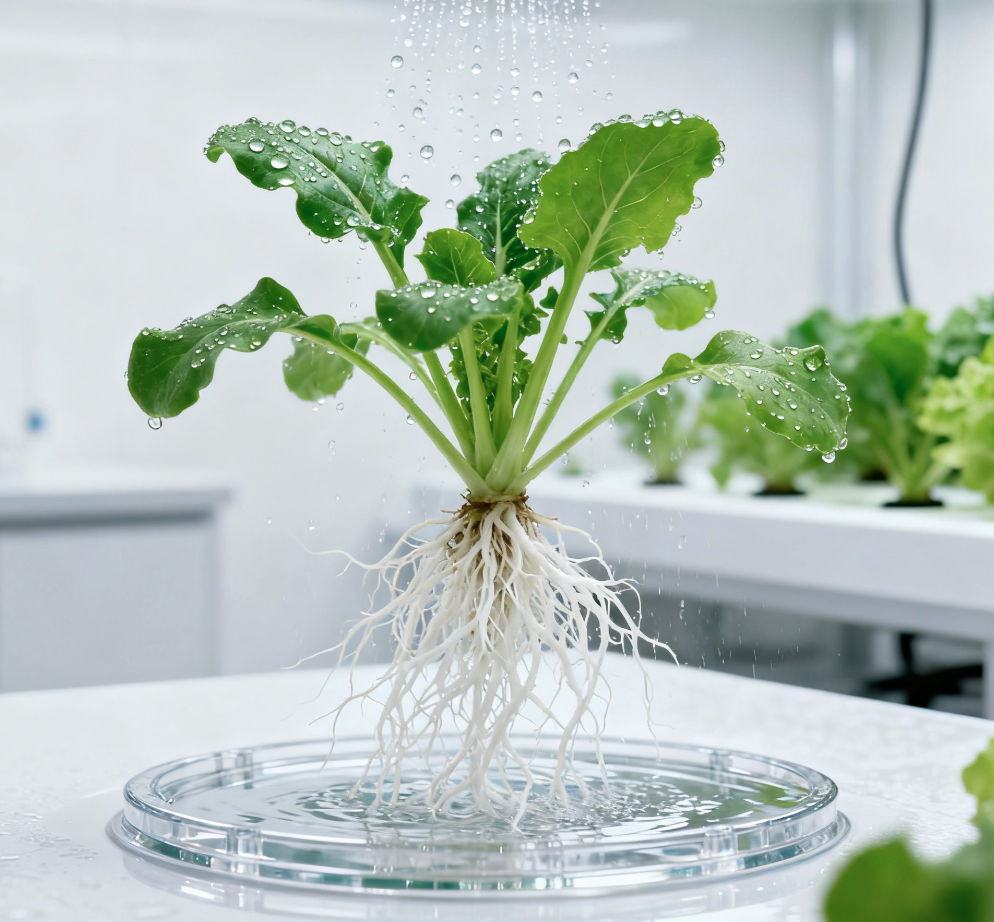
Modular farming, also called container farming, uses repurposed shipping containers to create controlled indoor growing environments. These containers can be stacked, linked, or expanded to scale production as needed. This method works well with hydroponics, aeroponics, or vertical farming.
Climate-independent and can operate in extreme conditions.
Scalable and flexible for urban or remote farming locations.
Efficient use of water, nutrients, and farm equipment.
Initial setup and equipment costs can be high.
Requires technical expertise to manage climate and nutrient systems.
Modular farming demonstrates how farming and technology intersect, making agriculture possible in places previously considered unsuitable.
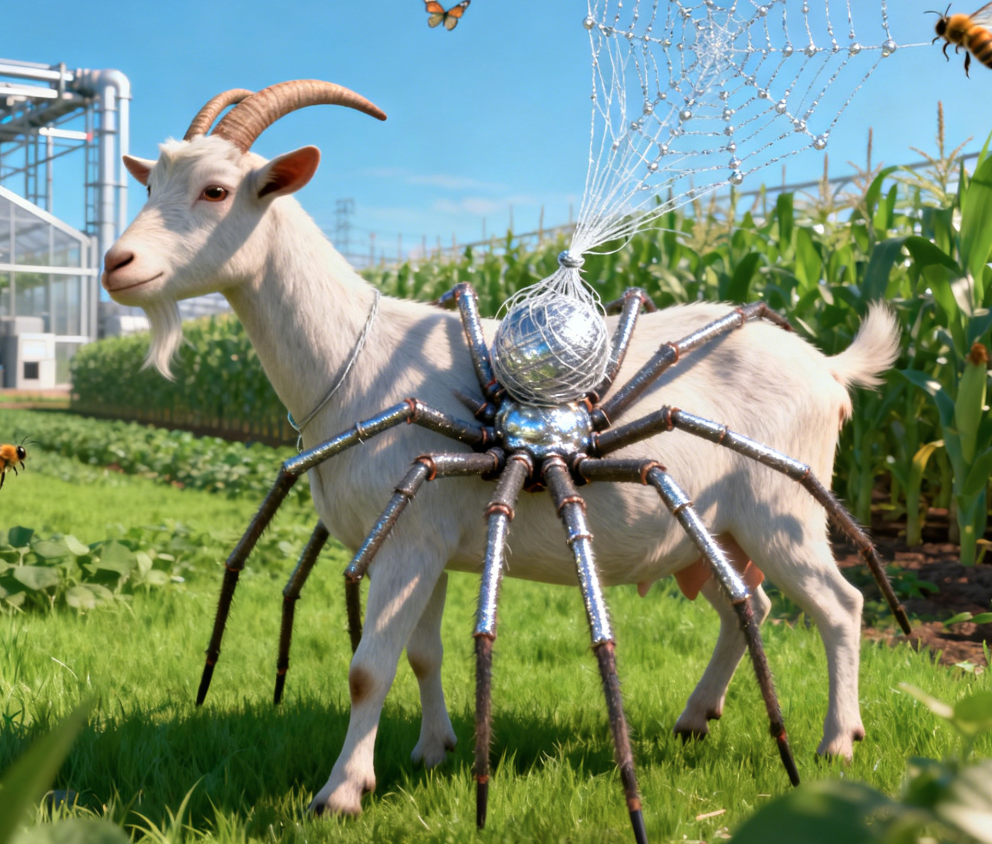
Spider-goat farming is one of the most unusual farming types, developed by researchers at Utah State University. Here, dairy goats are genetically modified to produce spider silk proteins in their milk.
DNA from golden orb spiders is integrated into goats.
Milk contains silk protein that is harvested and used to create strong, high-performance materials.
Body armor and protective clothing.
Fishing lines and ropes.
Medical materials such as artificial tendons and ligaments.
Spider-goat farming highlights the potential of biotechnology in farming, bridging agriculture and high-value industrial applications.
| Farming Type | Key Method | Space Required | Water Efficiency | Advantages | Challenges |
|---|---|---|---|---|---|
| Vertical Farming | Stacked indoor layers | Low | Medium | Maximizes yield, year-round growth | High setup cost, energy use |
| Hydroponics | Nutrient-rich water solutions | Low | High | Controlled growth, water-efficient | Requires monitoring equipment |
| Aeroponics | Roots suspended in mist | Low | Very High | Fast growth, nutrient-rich crops | Complex, high cost |
| Modular/Container | Indoor containers | Medium | Medium | Scalable, climate-independent | Equipment and expertise |
| Spider-Goat Farming | Genetic modification | Low | N/A | High-value products, innovative | Ethical and regulatory concerns |
The demand for sustainable and efficient farming is growing due to urbanization, climate change, and water scarcity. These unusual farming methods:
Maximize production in limited space.
Reduce reliance on traditional farm equipment and resources.
Promote sustainability, biodiversity, and ecosystem health.
Offer solutions for food security in extreme climates.
By adopting innovative techniques, farmers can produce more food with fewer resources, while cities can enjoy fresh, locally grown produce.
Aeroponics is the most water-efficient method, using up to 90% less water than hydroponics.
Yes, most vertical farms use hydroponic systems to maximize space and yield.
Some methods, like vertical farming and modular container farming, require significant upfront investment in farm equipment.
Leafy greens, herbs, microgreens, and high-value vegetables are ideal.
It provides high-strength materials from dairy milk while showcasing the potential of biotech in agriculture.
Exploring these unusual farming types shows just how inventive agriculture can be when technology and creativity meet necessity. From stacked indoor farms to biotech-enhanced goats, there’s no limit to how farmers can rethink growing food while conserving resources and space.
If you’re curious about bringing innovation to your own operations, Thinker Agricultural Machinery Co., Ltd. offers advanced farm equipment solutions designed to support modern, efficient, and sustainable farming methods. Embrace the future of agriculture and see what’s possible when imagination meets precision.


