
English ![]()

T: +86-18367823571
E: lyy@xg1688.cn
E: lyy@xg1688.cn
Building 2, No. 84, Qingxi Dongfeng Road, Qingxi Town, Dongguan City, Guangdong Province, 523642, China

Views: 0 Author: Site Editor Publish Time: 2025-07-18 Origin: Site
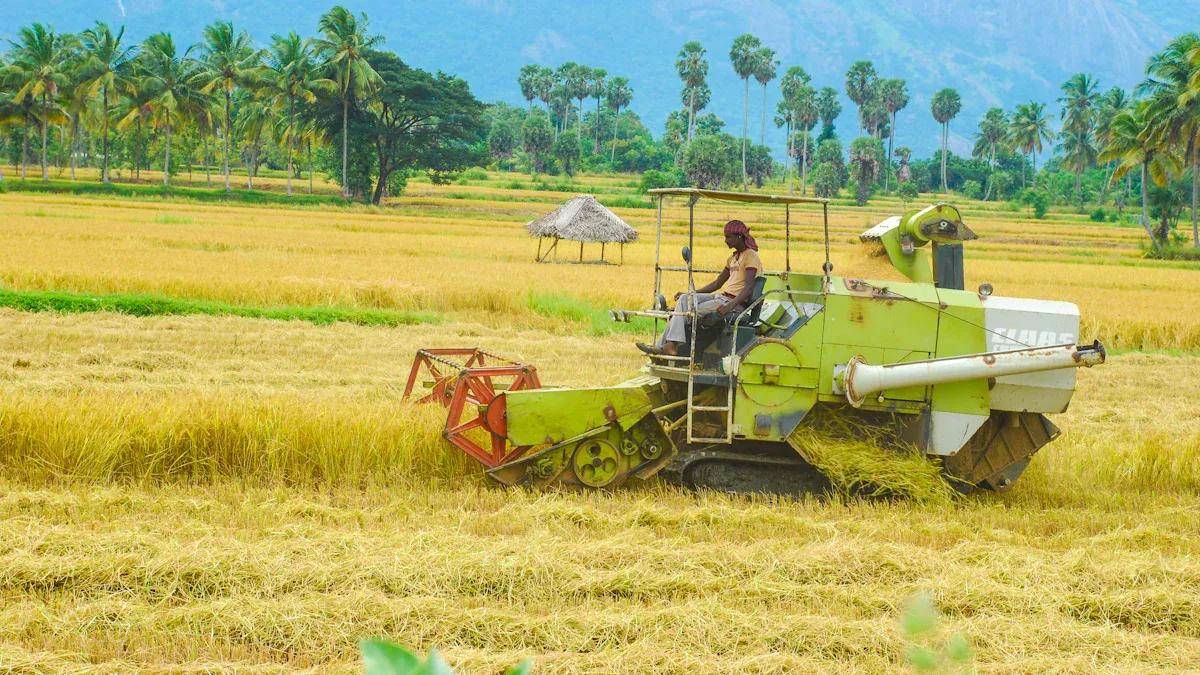
A rice transplanter is an agricultural machine that transfers young rice seedlings from nursery trays into prepared paddy fields. It automates a task traditionally completed by hand and helps maintain more consistent planting depth, row spacing and hill spacing.
The machine uses a seedling tray, feeding system and planting mechanism to separate seedlings and place them into the soil as it travels across the field. Rice transplanters are available as compact walk-behind machines and higher-capacity ride-on models for different farm sizes and field conditions.
This guide explains what a rice transplanter is, how it works, its main components and types, its benefits and limitations, and the factors to consider when selecting a machine.
A rice transplanter places nursery-grown rice seedlings into prepared paddy fields mechanically.
Its main systems include the seedling tray, feeding mechanism, planting unit, power system and field wheels.
Walk-behind models are generally suited to smaller or irregular fields, while ride-on models support higher-capacity operations.
Mechanical transplanting can reduce manual labor and improve planting consistency when seedlings and fields are properly prepared.
Machine selection should consider field size, soil conditions, planting rows, operating capacity, maintenance and parts support.
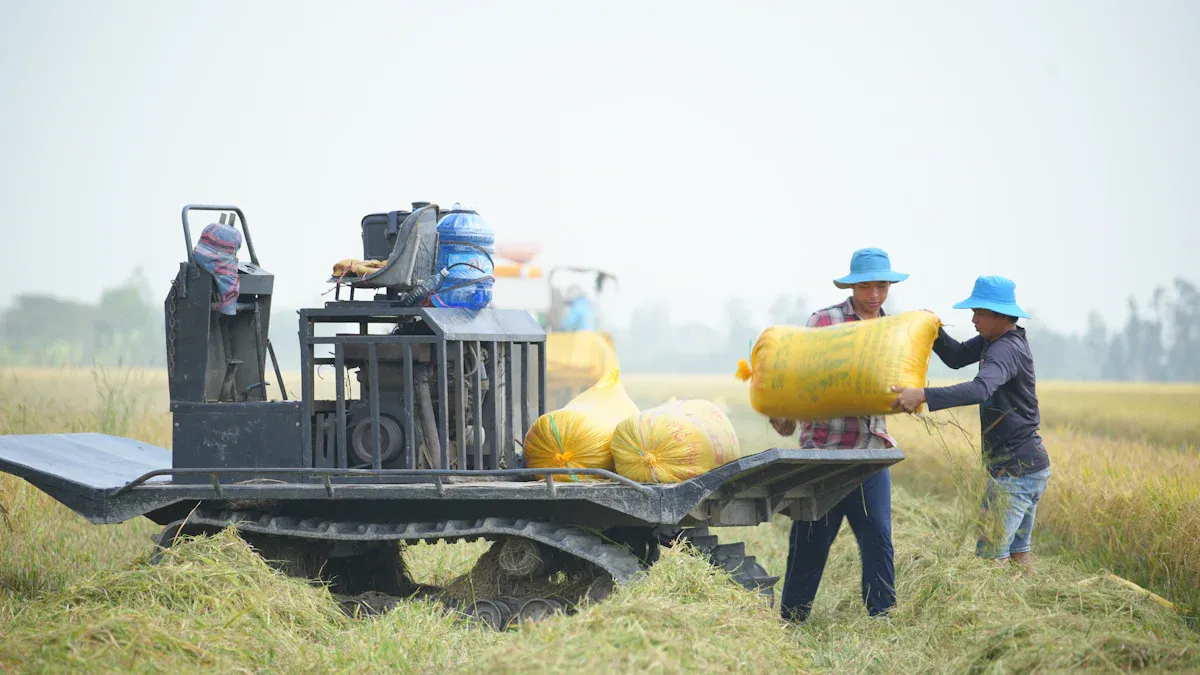
A rice transplanter, also called a paddy transplanter or rice planting machine, is designed to transplant nursery-grown rice seedlings into prepared fields. Instead of placing seedlings into the soil manually, the machine performs the pickup, feeding and planting actions continuously as it moves forward.
The operator loads seedling mats or trays onto the machine and adjusts the planting depth, hill spacing and other settings according to the crop and field conditions. A feeding system moves the seedlings toward the planting mechanism, where planting arms or claws separate and place them into the soil.
The result depends on more than the machine itself. Seedling quality, field leveling, soil consistency, water depth, operating speed and equipment settings all influence planting accuracy.
The main purpose of a rice transplanter is to complete seedling transplantation with less manual labor and greater consistency. When properly prepared and operated, the machine can help farmers:
Complete planting within the required seasonal window
Maintain more consistent row and hill spacing
Control planting depth more accurately
Reduce physically demanding manual work
Establish straight rows for later field management
Cover larger planting areas with fewer workers
A rice transplanter does not guarantee higher yields by itself. Crop performance still depends on seedling quality, field preparation, water management, fertilization, weed control and operator skill.
| Component | Main Function |
|---|---|
| Seedling tray | Holds prepared seedling mats and supplies them to the feeding system |
| Seedling feeding system | Moves seedlings toward the pickup and planting mechanism |
| Pickup mechanism | Separates a controlled number of seedlings from the mat |
| Planting unit | Places seedlings into the soil at the selected depth and spacing |
| Engine and transmission | Provide power for machine travel and planting operations |
| Field wheels or tracks | Support movement and traction in wet paddy fields |
| Steering and control system | Allows the operator to guide the machine and adjust settings |
| Hydraulic or leveling system | Helps maintain machine balance and planting depth on uneven ground |
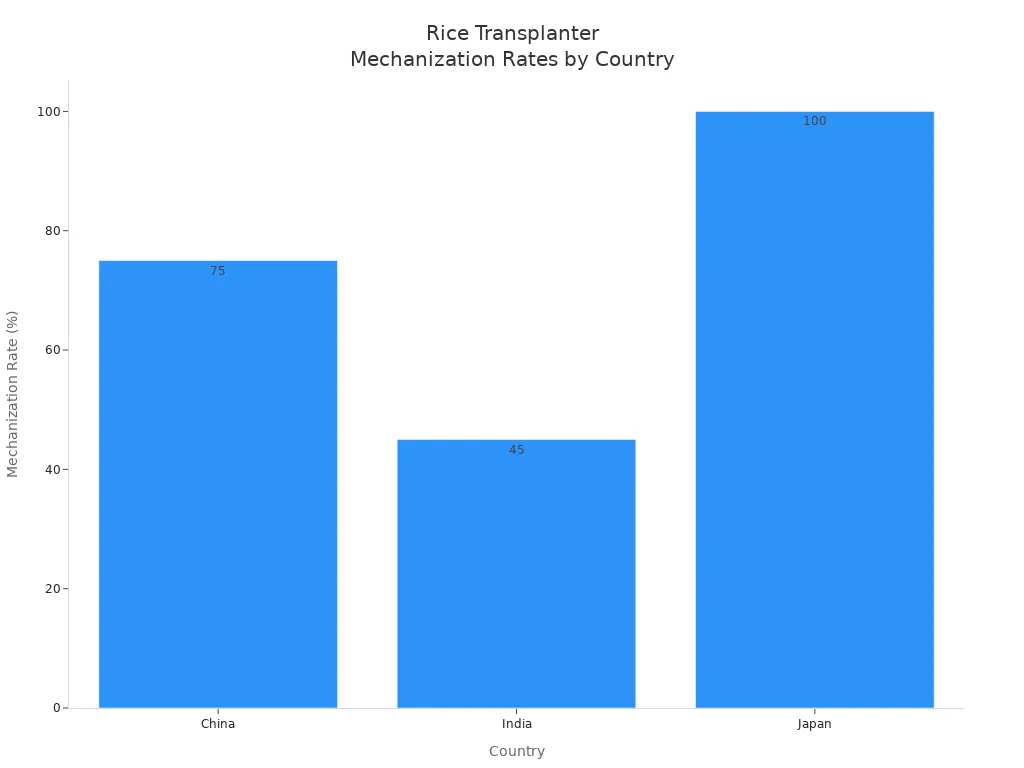
Rice transplanters can be classified by operating method, machine size and planting capacity. The three common categories are hand-operated, walk-behind and ride-on rice transplanters.
Hand-operated rice transplanters are compact machines designed to assist with seedling placement without a powered driving system. They are generally used in small, irregular or difficult-to-access fields.
Their simple structure can make operation and maintenance easier. However, they require more physical effort and offer lower planting capacity than powered machines.
Suitable for:
Small rice farms
Terraced or irregular fields
Areas with limited machine access
Farms beginning to adopt mechanized planting
A walk-behind rice transplanter is a powered machine guided by an operator walking behind it. Its compact design provides better maneuverability in narrow or segmented paddy fields.
Walk-behind models offer higher planting consistency than manual methods while requiring less investment and operating space than larger ride-on machines. The operator must still walk through the field and manage the machine directly.
Suitable for:
Small and medium-sized fields
Narrow or segmented paddies
Fields requiring frequent turns
Farms with moderate planting capacity requirements
A ride-on rice transplanter allows the operator to sit and drive the machine. These models usually provide more planting rows, greater operating capacity and improved comfort during longer working periods.
Ride-on machines are commonly used where large planting areas must be completed within a limited seasonal window. Their suitability depends on field access, turning space, soil conditions and available maintenance support.
Suitable for:
Medium and large rice farms
Commercial rice production
Agricultural cooperatives
Custom transplanting service providers
Regular fields with sufficient turning space
| Factor | Walk-Behind Model | Ride-On Model |
|---|---|---|
| Typical field size | Small to medium | Medium to large |
| Operator position | Walks behind the machine | Sits and drives |
| Maneuverability | Better in narrow fields | Better in open, regular fields |
| Planting capacity | Lower | Higher |
| Operator effort | Higher | Lower |
| Turning space | Less required | More required |
| Initial investment | Generally lower | Generally higher |
| Best application | Segmented or irregular paddies | Large-scale planting operations |
The best type is not determined by planting speed alone. Field shape, soil depth, access routes, available labor, planting rows, maintenance capability and total operating cost should all be considered.

Rice transplanter workflow from seedling feeding to placement in prepared soil.
A rice transplanter works by feeding nursery-grown seedlings from a tray into a planting mechanism. As the machine moves forward, planting arms or claws separate small groups of seedlings and insert them into the prepared soil at controlled intervals.
The engine or drive system powers both machine movement and the planting mechanism. This coordination helps maintain consistent spacing between rows and planting points.
Rice seedlings must be prepared in trays or nursery mats that match the machine’s feeding system. Seedling height, root development, mat thickness and moisture should remain reasonably uniform so the pickup mechanism can separate them correctly.
The paddy field should also be tilled, leveled and prepared to a suitable soil consistency. Excessively soft soil may cause the machine to sink, while hard or uneven soil can affect planting depth and seedling placement. An agricultural crawler tractor or rotary tillage machine can be used to prepare and level suitable paddy fields before transplanting.
Prepared seedling mats are placed on the machine’s seedling platform. The feeding system moves each mat gradually toward the pickup mechanism.
Additional trays may be carried on the machine, depending on its design, to reduce interruptions during field operation.
The pickup mechanism separates a controlled group of seedlings from the nursery mat. The number of seedlings collected depends on the machine setting, seedling condition and planting requirements.
Uniform seedling mats help reduce missing hills, excessive seedlings and damage to the roots.
Planting arms or claws move downward and insert the seedlings into the soil. The machine repeats this movement continuously as it travels across the field.
The operator can normally adjust planting depth and hill spacing within the machine’s available setting range. These adjustments should match the rice variety, soil condition and local planting method.
Field wheels, steering controls and leveling systems help the machine travel in a consistent direction. On suitable machines, hydraulic or automatic leveling systems can help reduce changes in planting depth when the field surface is uneven.
The operator should monitor row alignment, planted seedlings and wheel sinking throughout the operation. Settings may need to be adjusted when field conditions change.
After each pass, the operator turns the machine and aligns it with the previous row. Seedlings should be checked for:
Missing planting points
Excessive or insufficient planting depth
Floating or buried seedlings
Uneven row spacing
Damaged seedling roots
Irregular machine movement
Early inspection allows the operator to correct machine settings before continuing across the entire field.
Rice transplanter performance can vary according to:
Seedling age and uniformity
Nursery mat thickness and moisture
Soil consistency and field leveling
Water depth
Operating speed
Planting depth and spacing settings
Wheel traction and machine balance
Operator experience
Machine condition and maintenance
A properly adjusted machine can improve planting consistency and reduce manual labor, but results still depend on correct field preparation and operation.
A rice transplanter can improve planting efficiency and consistency, but its performance depends on correct machine selection, seedling preparation, field conditions and operator experience. Buyers should consider both the benefits and operating requirements before choosing a machine.
Reduced manual labor
The machine performs repetitive seedling placement automatically, reducing the number of workers needed for transplanting and lowering the physical effort associated with manual planting.
More consistent planting
Adjustable planting systems help maintain more uniform row spacing, hill spacing and planting depth. Consistent placement can also make later irrigation, fertilization, weed management and harvesting easier.
Faster field completion
Mechanized transplanting allows farmers to cover larger areas within the available planting window. Actual capacity depends on machine size, planting rows, field shape, soil conditions and operating speed.
Improved row alignment
Straight and evenly spaced rows make it easier for workers and machinery to move through the field during later crop management operations.
Adjustable planting settings
Many machines allow operators to adjust planting depth, hill spacing and the number of seedlings placed at each planting point. This helps the machine adapt to different rice varieties and field practices.
Better operator comfort
Ride-on models allow operators to remain seated during planting, reducing fatigue during longer operations. Walk-behind models can also reduce the repetitive bending required by manual transplanting.
Careful seedling preparation is required
Seedlings must be grown in suitable nursery trays or mats. Uneven height, weak roots or inconsistent mat thickness can cause missed planting points and irregular seedling pickup.
Field preparation affects performance
Poor leveling, deep mud, excessive water or hard soil can reduce traction and planting accuracy. Paddy fields must be prepared according to machine and crop requirements.
Initial investment may be higher
Powered walk-behind and ride-on machines require more investment than manual planting tools. Buyers should also consider fuel, maintenance, operator training and replacement parts.
Maintenance is necessary
Planting arms, pickup mechanisms, trays, drive systems and field wheels must be inspected and maintained regularly. Mud and plant material should be removed after operation.
Not every machine suits every field
Large ride-on machines may be difficult to operate in small, terraced or irregular fields. Compact machines may be easier to maneuver but generally offer lower planting capacity.
| Benefits | Limitations |
|---|---|
| Reduces repetitive manual work | Requires suitable nursery seedlings |
| Improves planting consistency | Depends on proper field preparation |
| Completes planting more quickly | Involves purchase and operating costs |
| Produces straighter rows | Requires regular cleaning and maintenance |
| Provides adjustable planting settings | Machine size must match field conditions |
| Improves operator comfort | Training may be required |
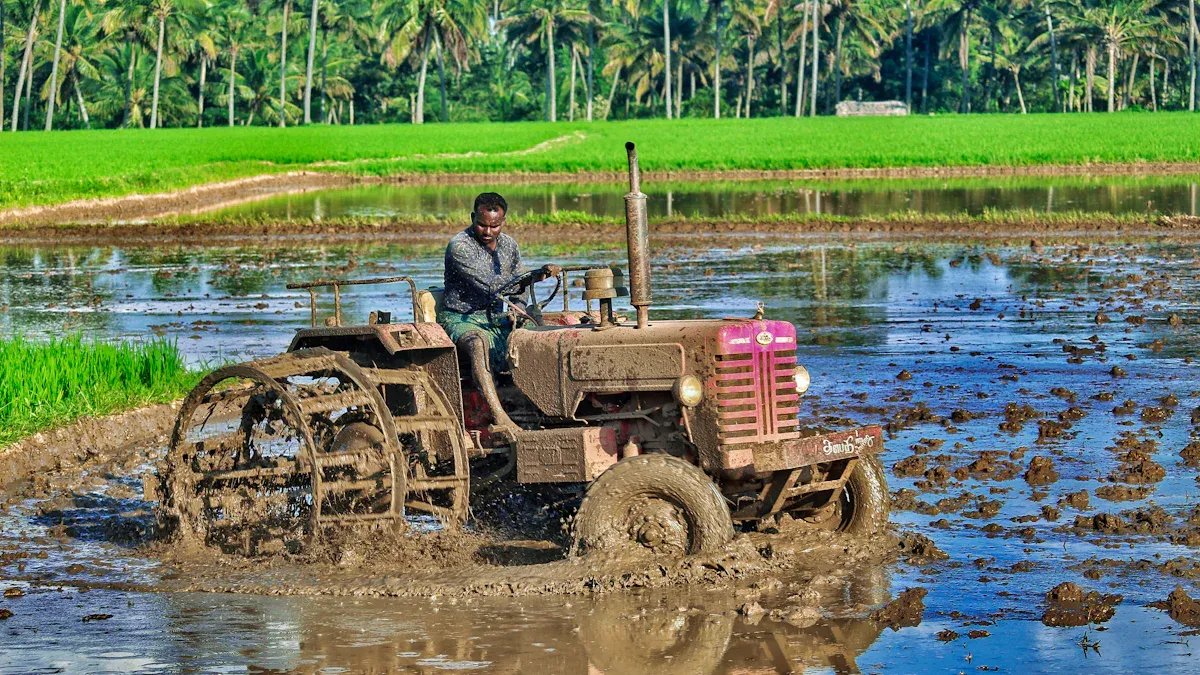
Rice transplanters are used in different rice production systems to reduce manual planting work and improve seedling placement. The appropriate machine depends on field size, field shape, soil conditions, required planting capacity and available labor.
Compact hand-operated or walk-behind rice transplanters can be used in small, narrow or irregular paddy fields. Their smaller turning radius makes them easier to guide around field boundaries and between segmented plots.
Before selection, farmers should check field access, machine width, turning space and soil depth.
Medium-sized farms may use powered walk-behind or compact ride-on machines. These models can provide a balance between planting capacity, maneuverability and investment cost.
The best configuration depends on the total planting area, field layout, available workers and required number of planting rows.
Ride-on rice transplanters are commonly used on large and regularly shaped fields. Their wider planting width and seated operation help farmers complete larger areas during a limited planting season.
Field entrances, turning areas and nursery seedling supply must be planned to reduce interruptions.
Rice transplanters use specialized field wheels or traction systems to move through prepared paddy soil. Machine weight, wheel design, ground clearance and soil consistency all influence mobility.
Very deep mud, excessive water or uneven soil can cause sinking, slipping or inconsistent planting depth. Field conditions should therefore be checked before operation.
Cooperatives and agricultural service providers may use higher-capacity rice transplanters across multiple farms. These machines can support seasonal contract planting where equipment ownership is not practical for every individual grower.
Reliable maintenance, trained operators, spare parts and transport arrangements are especially important in this application.
Rice transplanters can operate as part of a broader mechanized rice production system that includes:
Seedling nursery equipment
Land preparation and leveling equipment
Irrigation and water-management systems
Fertilizer and crop-protection equipment
Rice harvesting machinery
Grain drying and post-harvest equipment
Coordinating these operations helps farmers manage planting schedules and field activities more efficiently. After crop maturity, farmers can continue the mechanized production cycle by understanding the combine harvester working process .
| Application | Commonly Suitable Type | Main Selection Considerations |
|---|---|---|
| Small or terraced fields | Hand-operated or compact walk-behind | Access, turning space and machine weight |
| Medium-sized farms | Powered walk-behind or compact ride-on | Capacity, maneuverability and budget |
| Large commercial farms | Multi-row ride-on | Planting width, field capacity and support |
| Wet or soft paddies | Machine designed for paddy conditions | Traction, ground clearance and soil depth |
| Cooperative planting services | Higher-capacity ride-on | Reliability, transport and parts availability |
Choosing a rice transplanter requires more than comparing planting speed or purchase price. The machine must match the farm’s field conditions, seedling system, labor availability and expected operating workload.
Small, narrow or irregular fields generally require a compact machine with good maneuverability. Larger and regularly shaped fields can support wider ride-on models with more planting rows.
Consider field entrances, boundary width, turning space and the distance between plots.
Walk-behind machines generally involve a lower initial investment and are easier to use in compact fields. Ride-on machines provide greater capacity and operator comfort but require more working and turning space.
The machine type should match the actual planting area rather than farm size alone.
Machines with more planting rows can cover a wider area during each pass. However, wider machines may be harder to operate in segmented fields and may require more careful transport and field access planning.
Compare planting width, row spacing and machine dimensions before selecting a model.
Wet soil, deep mud, uneven ground and water depth can affect traction and planting accuracy. Check the machine’s wheel design, ground clearance, weight and leveling system.
A field test under local conditions is useful when the soil is especially soft or difficult.
The seedling tray and feeding mechanism must match the nursery method being used. Confirm the acceptable seedling mat dimensions, seedling height, root development and mat thickness.
Poor compatibility between seedlings and the feeding system can cause missing hills, damaged roots and irregular planting.
Useful adjustment options may include:
Planting depth
Hill spacing
Row spacing
Number of seedlings per hill
Seedling feeding rate
Machine travel speed
Settings should be easy for operators to understand and adjust in the field.
Check the machine’s overall dimensions, turning radius, operating controls and transport requirements. Farms with separated plots may need a machine that can be loaded, unloaded and moved efficiently.
Operator visibility, seating comfort and control layout are also important for long working periods.
Planting mechanisms contain moving components that require cleaning, lubrication and inspection. Before purchasing, confirm:
Availability of planting arms and pickup components
Access to filters, belts, bearings and seals
Recommended maintenance intervals
Local technical support
Operator and maintenance manuals
Spare-parts delivery time
Purchase price is only one part of the cost. Buyers should also consider:
Fuel consumption
Routine maintenance
Wear-part replacement
Operator training
Transportation between fields
Seasonal storage
Possible downtime during planting season
A lower-priced machine may not provide the lowest long-term operating cost if parts and technical support are difficult to obtain.
Before requesting a quotation, prepare the following information:
Total planting area
Average field size and shape
Soil and water conditions
Preferred number of planting rows
Nursery tray or seedling mat specifications
Required planting depth and spacing
Available operators
Transport requirements
Expected annual operating hours
Local parts and service requirements
Providing this information helps the supplier recommend a machine configuration that better matches the actual farming operation.
Correct operation and regular maintenance help maintain planting consistency and reduce downtime during the short rice transplanting season. Always follow the instructions and service intervals specified in the machine’s operation manual.
Before entering the field:
Check engine oil, fuel and coolant levels where applicable
Inspect planting arms, pickup fingers and seedling trays
Confirm that guards and fasteners are secure
Lubricate the required moving components
Remove mud, straw or debris from the mechanism
Check field wheels, tires or traction components
Test steering, brakes and control levers
Confirm planting depth and spacing settings
Load uniform seedling mats correctly
Inspect the field entrance and turning area
Operate the machine briefly at low speed before planting to confirm that all systems move smoothly.
Monitor the machine regularly while working. Check whether seedlings remain upright and whether planting depth, row alignment and hill spacing are consistent.
Stop and inspect the machine if you notice:
Missing planting points
Too many or too few seedlings per hill
Floating or buried seedlings
Uneven planting depth
Seedlings caught in the feeding system
Unusual vibration or noise
Excessive wheel sinking or slipping
Do not attempt to clear the planting mechanism while the engine or drive system is operating.
Mud, water and plant material can accelerate wear or block moving parts. After each working period:
Park the machine on stable ground
Switch off the engine and allow components to stop
Remove seedlings and residue from the trays
Clean mud from the wheels and planting mechanism
Inspect planting arms and pickup components for damage
Dry exposed metal components where necessary
Lubricate the points specified in the manual
Record any problems requiring repair
Avoid directing high-pressure water at bearings, electrical connectors, seals or control units unless the manufacturer allows it.
Maintenance requirements vary by model. Common service tasks include:
Engine oil and filter replacement
Fuel and air-filter inspection
Transmission or gearbox fluid checks
Belt and chain tension adjustment
Bearing and linkage lubrication
Planting-arm inspection
Electrical and hydraulic system checks
Fastener tightening
Wheel and axle inspection
Use the manufacturer’s operating-hour schedule rather than relying on one universal service interval.
Before storing the rice transplanter:
Clean and dry the machine thoroughly
Complete required engine and fluid maintenance
Protect exposed metal surfaces from corrosion
Store seedling trays without bending or loading them
Disconnect or maintain the battery as instructed
Keep the machine in a dry, covered area
Record replacement parts needed before the next season
A pre-season inspection should be completed early enough to repair problems before transplanting begins.
Thinker Agricultural Machinery offers walk-behind and ride-on rice transplanters for different field sizes and planting-capacity requirements. The final model should be selected according to field conditions, planting rows, seedling specifications and required productivity.
The Hand Rice Transplanter is available in 4-row and 6-row configurations. Its walk-behind structure is suitable for farms requiring a compact machine and easier maneuverability in smaller or segmented paddy fields.
Consider this option for:
Small and medium-sized fields
Narrow or irregular plots
Farms requiring 4-row or 6-row planting
Operations with limited turning space

The 2ZGQ(C)-6 6-Row High-Speed Rice Transplanter is a ride-on model designed for operations requiring greater planting capacity and operator comfort.
Consider this option for:
Medium-sized and larger rice farms
Regular paddy fields
Farms requiring 6-row planting
Longer daily operating periods

The 2ZGQ(C)-8 8-Row High-Speed Rice Transplanter provides a wider planting configuration for farms that need to complete large planting areas within a limited seasonal window.
Consider this option for:
Large-scale rice farms
Commercial planting operations
Agricultural cooperatives
Custom transplanting service providers
Fields with sufficient access and turning space
| Model Type | Planting Configuration | General Application |
|---|---|---|
| Walk-behind rice transplanter | 4 or 6 rows | Small and segmented fields |
| 2ZGQ(C)-6 ride-on model | 6 rows | Medium and larger farms |
| 2ZGQ(C)-8 ride-on model | 8 rows | Large-scale planting operations |
Actual performance depends on field shape, soil conditions, seedling preparation, machine settings and operator experience. Review the complete technical specifications before selecting a model.
View all rice transplanters or contact Thinker Agricultural Machinery to discuss your field requirements.
A rice transplanter transfers nursery-grown rice seedlings into prepared paddy fields. It helps reduce manual planting work and maintain more consistent planting depth, row spacing and hill spacing.
The machine moves seedlings from a tray into a feeding system. Pickup fingers separate small groups of seedlings, and planting arms insert them into the soil as the machine travels forward.
The main types are hand-operated, walk-behind and ride-on rice transplanters. Hand-operated and walk-behind machines are generally used in smaller fields, while ride-on models provide higher capacity for larger planting areas.
Manual transplanting requires workers to place seedlings individually by hand. A rice transplanter automates seedling pickup and placement, reducing repetitive labor and improving planting consistency when the machine and field are correctly prepared.
Yes. Rice transplanters are designed for prepared paddy fields and use specialized wheels or traction systems. However, very deep mud, excessive water or uneven soil can cause sinking and inconsistent planting.
Seedlings should be grown in nursery trays or mats compatible with the machine. Uniform seedling height, root development, mat thickness and moisture help the pickup mechanism separate and plant seedlings correctly.
Always check the machine manufacturer’s seedling specifications before operation.
Consider field size, field shape, soil conditions, planting rows, seedling compatibility, required capacity, available labor, transport, maintenance and spare-parts support.
Small or irregular fields may require a compact walk-behind machine. Larger regular fields may benefit from a ride-on model.
The cost depends on the machine type, planting rows, engine, transmission, automation level, included attachments and service requirements. Buyers should request a quotation based on the required configuration instead of relying on a general price range.
The machine should be inspected before each operation and cleaned after field use. Engine service, lubrication, fluid replacement and wear-part inspection should follow the intervals in the manufacturer’s operation manual.
A rice transplanter automates the process of moving nursery-grown seedlings into prepared paddy fields. Depending on the farm, growers can choose from compact walk-behind machines or higher-capacity ride-on models.
The right machine should match the field size, soil conditions, seedling system, planting rows, labor availability and maintenance capability. Proper seedling preparation, field leveling and machine adjustment are equally important for consistent transplanting.
Before purchasing, compare complete specifications and confirm that spare parts, operating instructions and technical support are available.
Find the Right Rice Transplanter for Your FarmShare your field size, soil conditions and required planting rows with our team for a suitable machine recommendation. View our rice transplanter range or contact our team to discuss your application. |


