


T: +86-18367823571
E: lyy@xg1688.cn
E: lyy@xg1688.cn
Building 2, No. 84, Qingxi Dongfeng Road, Qingxi Town, Dongguan City, Guangdong Province, 523642, China


Views: 0 Author: Site Editor Publish Time: 2026-10-15 Origin: Site


Table of Contents
A rice planting machine, also known as a rice transplanter, works by transferring nursery-grown rice seedlings from a feeding tray into prepared paddy soil. A mechanical pickup mechanism separates small groups of seedlings, while planting arms insert them into the soil at controlled depths and intervals.
As the machine moves forward, the seedling feeding system and planting mechanism operate together to produce consistent planting rows. Operators can adjust planting depth, hill spacing, and other settings according to the rice variety, seedling conditions, and field requirements.
In this guide, we explain how a rice planting machine works step by step, from preparing seedlings and loading trays to adjusting the machine and completing the transplanting process.
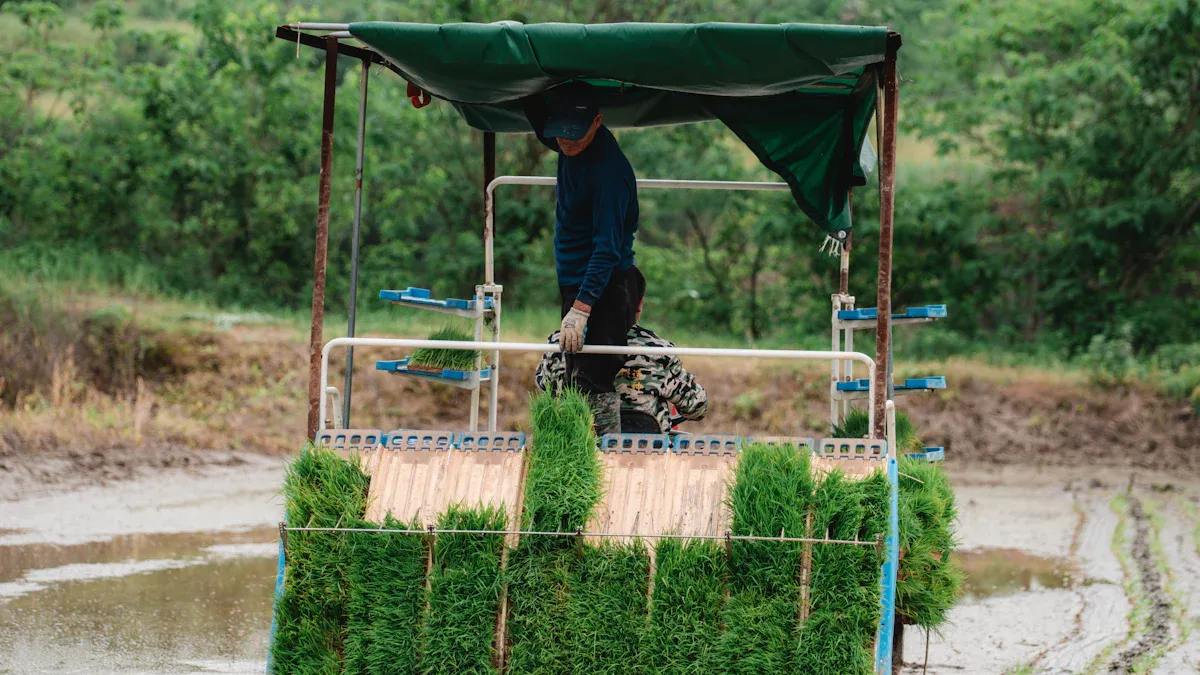
A rice planting machine automatically transfers nursery-grown seedlings into prepared paddy soil using mechanical pickup claws and planting arms.
The working process includes field preparation, seedling loading, machine adjustment, forward movement, seedling insertion, and planting inspection.
Planting depth and hill spacing can be adjusted according to rice varieties, field conditions, and machine specifications.
Uniform seedling mats and properly prepared paddy soil help reduce missing seedlings and planting interruptions.
Regular inspection of the feeding mechanism and planting components supports consistent transplanting performance.

A rice planting machine automates the process of transferring young rice seedlings from nursery trays into prepared paddy fields. Its feeding system, pickup mechanism, and planting arms work together to place seedlings at controlled depths and spacing.
Although operating procedures vary by model, most mechanical rice transplanters follow these six basic steps.
Before operating the rice planting machine, ensure the field is properly leveled and puddled. The soil should be soft enough for the planting arms to insert seedlings without excessive resistance.
Prepare healthy, uniform rice seedlings grown in nursery mats. Check their root development, mat thickness, and moisture content to ensure smooth feeding.
Key preparation checks:
Level the paddy surface and remove large debris.
Maintain suitable shallow-water conditions for transplanting.
Inspect seedling mats for uniform growth and intact roots.
Check the machine's planting claws, transmission components, and controls.
Proper preparation reduces missed plantings, seedling damage, and interruptions during operation.
Place the prepared seedling mats into the machine's feeding tray according to the manufacturer's instructions.
The feeding mechanism gradually moves the seedling mats toward the pickup position. A tray-shifting system distributes seedlings across the planting mechanism, helping maintain a consistent supply during operation.
Ensure the mats are positioned correctly and move freely without excessive compression or gaps.
Why it matters: Uniform seedling feeding helps prevent empty planting points, irregular seedling pickup, and mechanical jams.
Before entering the field, configure the rice transplanter according to the rice variety, field conditions, and planting requirements.
The main adjustments typically include:
Planting Depth: Set the planting mechanism to insert seedlings at a suitable depth for healthy root establishment.
Hill Spacing: Select the distance between planting positions using the machine's available spacing settings.
Seedlings per Hill: Adjust the pickup quantity where supported by the machine.
Machine Leveling: Check the float and leveling controls to maintain stable operation on uneven or muddy surfaces.
Run a short test pass and inspect the planting results before proceeding across the entire field.
Start the engine and follow the manufacturer's recommended warm-up and engagement procedures.
Once the planting mechanism is engaged, drive the machine forward at a stable operating speed.
As the machine moves, the transmission system coordinates seedling feeding, pickup, and planting operations.
Keep the machine aligned with the intended planting rows and avoid sudden acceleration or sharp steering corrections.
Operating tip: Maintain a consistent driving speed within the recommended operating range. Actual hill spacing depends on the machine's drive and planting control system, so verify the results during a test pass.
This is the central working process of a rice planting machine.
As the planting mechanism rotates, mechanical pickup claws separate small groups of seedlings from the nursery mat. The planting arms then guide these seedlings downward into the prepared paddy soil.
The planting cycle follows three actions:
Seedling Pickup: The pickup claws collect a small portion of the seedling mat.
Seedling Transfer: The planting mechanism carries the seedlings toward the soil.
Seedling Insertion: The planting arms insert the seedlings into the soft mud at the selected depth.
After insertion, the surrounding soil helps support the transplanted seedlings.
This sequence repeats continuously as the rice transplanter travels across the field, creating organized planting rows.
After completing a short test pass, stop the machine safely and inspect several planted rows.
Check whether the seedlings are positioned correctly and whether the planting depth and spacing are consistent.
Pay particular attention to:
Missing Hills: Check seedling feeding and pickup settings if planting positions are empty.
Floating Seedlings: Inspect planting depth and field water conditions.
Uneven Spacing: Verify the hill-spacing settings and operating conditions.
Damaged Seedlings: Examine planting claws, seedling mat quality, and pickup quantity.
Make adjustments according to the machine's operating manual before continuing.
Regularly checking planting quality helps maintain consistent transplanting results and reduces the need for manual corrections.
Step |
Operation |
Main Purpose |
|---|---|---|
1 |
Prepare field and seedlings |
Ensure suitable transplanting conditions |
2 |
Load seedling mats |
Supply seedlings to the feeding system |
3 |
Adjust machine settings |
Control planting depth and spacing |
4 |
Start and move forward |
Coordinate machine movement and planting |
5 |
Pick up and insert seedlings |
Mechanically transplant rice seedlings |
6 |
Check planting accuracy |
Identify and correct planting problems |
By following these six steps, operators can use a rice planting machine more effectively while maintaining consistent planting depth, spacing, and seedling placement.
For larger fields or different planting requirements, explore our Rice Transplanter models to compare available configurations and select suitable equipment.
A rice planting machine consists of several interconnected mechanical systems that work together to feed, pick up, and transplant rice seedlings. Understanding these components helps operators adjust the machine correctly, identify potential problems, and maintain consistent planting performance.
Component |
Main Function |
|---|---|
Seedling Tray |
Holds nursery-grown seedling mats and supplies them to the feeding mechanism. |
Seedling Feeding Mechanism |
Moves the seedling mats toward the pickup position for continuous transplanting. |
Pickup Claws |
Separate small groups of seedlings from the mat for each planting cycle. |
Planting Arms |
Transfer the seedlings downward and insert them into prepared paddy soil. |
Engine and Transmission System |
Provide power for machine movement and coordinate the planting mechanism. |
Leveling and Depth Control System |
Helps maintain suitable planting depth and machine stability in uneven field conditions. |
The seedling feeding mechanism supplies nursery-grown seedlings to the pickup claws, while the planting arms transfer them into the prepared soil. The engine and transmission system coordinate machine movement and planting operations, and the leveling system helps maintain consistent planting depth. Together, these components support continuous and accurate rice transplanting.

Correct planting depth and hill spacing are essential for consistent rice transplanting. Improper settings can result in floating seedlings, uneven plant density, or poor seedling establishment.
Most rice transplanters provide adjustable planting settings, although the available controls and adjustment ranges vary by model.
Planting depth determines how far the seedling roots are inserted into the prepared paddy soil.
If seedlings are planted too shallowly, they may float or become dislodged. Excessive planting depth can bury the growing point and interfere with healthy establishment.
Recommended adjustment process:
Check the soil consistency and water conditions before adjusting the machine.
Locate the planting-depth adjustment control specified in the operator's manual.
Select a suitable depth based on seedling size and field conditions.
Operate the machine over a short test section.
Inspect the planted seedlings and adjust the setting if necessary.
The objective is to position seedlings securely in the soil without burying the growing point.
Hill spacing refers to the distance between successive groups of transplanted rice seedlings within the same row.
Appropriate spacing helps maintain the intended plant population and supports uniform crop development.
When adjusting hill spacing, consider:
Rice Variety: Different varieties may require different planting densities.
Seedling Quality: Seedling age, size, and root development can influence suitable planting settings.
Field Conditions: Soil fertility and local growing conditions affect planting density requirements.
Machine Configuration: Available spacing settings depend on the transplanter model.
Use the machine's designated hill-spacing control to select the required setting. After a short test pass, measure the actual distance between planting positions and verify that it matches the planting plan.
Paddy soil conditions can influence machine stability, planting depth, and seedling placement.
Field Condition |
Potential Problem |
Recommended Adjustment |
|---|---|---|
Deep, soft mud |
Seedlings may be inserted too deeply or become unstable |
Check planting depth and machine leveling; adjust supported controls |
Firm soil |
Planting claws may struggle to insert seedlings |
Improve field preparation and verify planting depth |
Uneven field surface |
Inconsistent planting depth and row alignment |
Improve field leveling and check machine stability |
Excessive standing water |
Seedlings may float or become displaced |
Reduce standing water to a suitable level before transplanting |
Irregular seedling mats |
Missed planting positions or inconsistent seedling pickup |
Check seedling mat quality and feeding adjustments |
After changing planting depth or spacing, complete a short test pass and inspect several planting rows.
Check for consistent spacing, secure seedling placement, suitable planting depth, and missing hills.
If irregularities remain, inspect the planting mechanism, seedling feeding system, and field conditions before continuing.
Note: Always follow the adjustment procedures and operating limits specified for your rice transplanter model.
Even with proper preparation, rice planting machines may experience missed seedlings, uneven planting depth, or feeding interruptions during field operations.
Most problems are related to seedling quality, field conditions, machine adjustments, or worn planting components. Identifying the possible cause early helps operators maintain consistent transplanting performance and avoid unnecessary downtime.
Common Problem |
Possible Cause |
Recommended Solution |
|---|---|---|
Missing seedlings or empty hills |
Uneven seedling mats, incorrect pickup settings, or feeding interruptions |
Inspect seedling mats, check the feeding mechanism, and adjust pickup settings according to the machine manual. |
Floating or displaced seedlings |
Insufficient planting depth, excessive standing water, or unsuitable soil conditions |
Check planting depth, improve field conditions, and adjust water levels before continuing. |
Uneven planting depth |
Irregular field surfaces, unstable machine leveling, or incorrect depth settings |
Improve field leveling and inspect the machine's depth control and leveling system. |
Clogged planting claws |
Excessive root mat thickness, accumulated mud, or foreign material |
Stop the machine safely, remove blockages, and inspect the planting mechanism before restarting. |
Irregular hill spacing |
Incorrect spacing settings, wheel slippage, or inconsistent machine operation |
Verify hill-spacing settings, check traction conditions, and inspect actual spacing after a short test pass. |
Damaged or broken seedlings |
Worn planting claws, improper pickup quantity, or unsuitable seedling mats |
Inspect planting components and adjust seedling feeding and pickup settings. |
Planting mechanism stops working |
Drive system problems, damaged components, or incorrect clutch engagement |
Stop operation and inspect the transmission, clutch, and relevant mechanical components according to the operator's manual. |
Regular inspection and correct machine operation can reduce common transplanting problems.
Before starting fieldwork, operators should:
Inspect seedling quality: Use uniform seedling mats with suitable root development.
Check planting components: Examine pickup claws, planting arms, and the feeding mechanism for damage or blockages.
Prepare field conditions: Ensure the paddy is properly leveled and suitable for mechanical transplanting.
Verify machine settings: Confirm planting depth, hill spacing, and pickup quantity before operation.
Perform a test pass: Inspect several planting rows and correct any irregularities before continuing.
If problems persist after basic adjustments, consult the machine's operating manual or contact the equipment supplier for technical assistance.
Proper maintenance and timely troubleshooting help reduce missed planting positions, protect seedlings, and support more consistent rice transplanting results.
Rice transplanters are available in different configurations to accommodate various field sizes, planting requirements, and operating conditions. Although their planting mechanisms follow similar principles, the number of planting rows and operating methods can affect field coverage and maneuverability.
Thinker Agri offers several rice transplanter configurations for different agricultural applications.
Model |
Planting Rows |
Operation Type |
Suitable Application |
|---|---|---|---|
2ZGQ(C)-8 High-Speed Rice Transplanter |
8 rows |
Ride-on |
Large-scale rice farms and commercial planting |
2ZGQ(C)-6 High-Speed Rice Transplanter |
6 rows |
Ride-on |
Medium-sized and segmented paddy fields |
Hand Rice Transplanter |
4 or 6 rows, depending on model |
Walk-behind |
Small fields, terraced paddies, and limited-access areas |
8-Row Rice Transplanter: Designed for larger fields where wider planting coverage can improve operational efficiency and reduce the number of field passes.
6-Row Rice Transplanter: Provides a balance between planting capacity and maneuverability, making it suitable for medium-sized fields and more segmented planting areas.
Walk-Behind Rice Transplanter: Offers greater flexibility in smaller or irregularly shaped fields where larger ride-on machines may be difficult to operate.
The appropriate machine depends on field size, terrain, planting requirements, and available operating space.
Explore Thinker Agri's Rice Transplanter Range to compare available models and technical specifications.
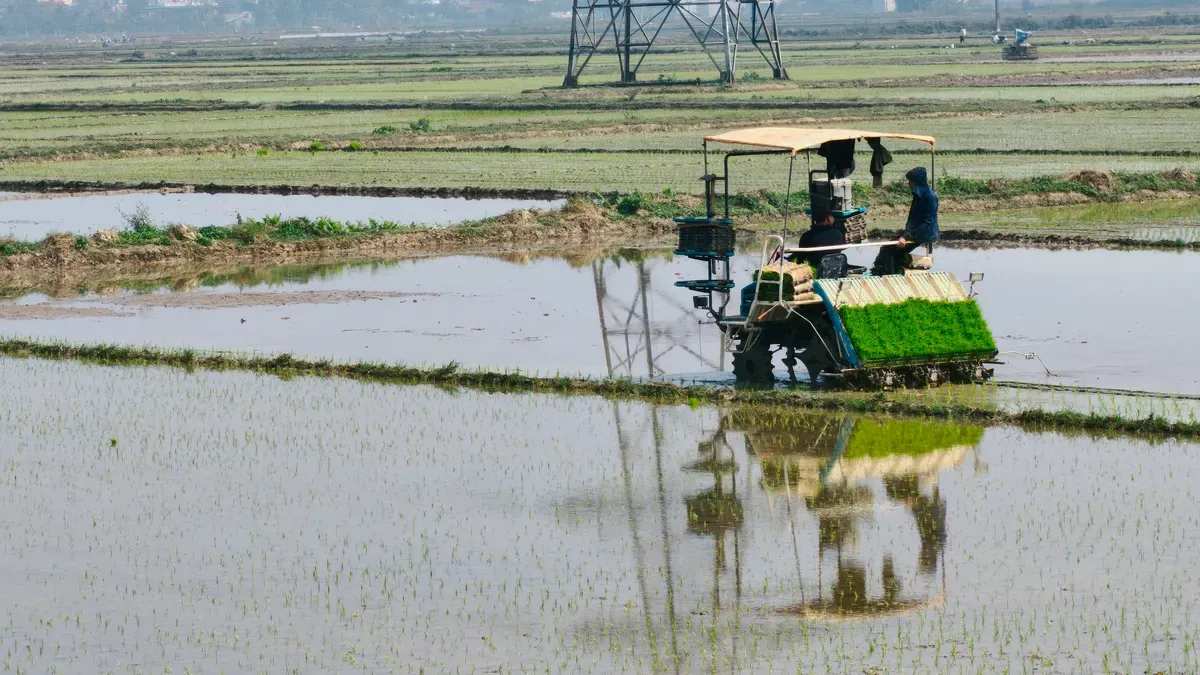
Compared with manual rice transplanting, a rice planting machine can improve planting efficiency, reduce labor requirements, and support more consistent seedling placement. These advantages are especially valuable for farms managing large planting areas or limited seasonal labor availability.
Manual rice transplanting requires considerable time and physical effort, particularly during peak planting seasons.
A mechanical rice transplanter automates seedling pickup and insertion, allowing operators to cover larger areas with fewer workers.
This helps farms reduce dependence on seasonal labor and organize transplanting operations more efficiently.
Uniform planting depth and spacing are important for successful rice establishment.
Rice transplanters use coordinated feeding and planting mechanisms to place seedlings at controlled intervals. When the machine is correctly adjusted and field conditions are suitable, this process helps reduce irregular planting patterns.
Consistent seedling placement also makes subsequent field management easier.
Mechanical transplanting can help farms complete planting operations within the required agricultural window.
Multi-row rice transplanters plant several rows simultaneously, reducing the number of field passes needed to cover a given area.
Depending on the machine configuration, field conditions, and operator experience, this can improve overall planting efficiency compared with manual methods.
For farms managing different paddy sizes, selecting a suitable rice transplanter helps balance working capacity, maneuverability, and operating requirements.
A rice planting machine uses a mechanical feeding system to move nursery-grown seedling mats toward the planting mechanism. Pickup claws separate small groups of seedlings, and planting arms insert them into prepared paddy soil at controlled depths and spacing. This process repeats as the machine moves forward, creating organized planting rows.
A rice transplanter uses mechanical pickup claws to separate small groups of seedlings from nursery mats. The feeding system moves the seedling mats into position, allowing the planting mechanism to collect and transfer seedlings into the soil during each planting cycle.
Planting depth depends on seedling size, soil conditions, and machine configuration. Seedlings should be inserted deeply enough to remain securely anchored without burying their growing points. Operators should follow the manufacturer's guidelines and inspect planting depth during a short test pass.
Missing seedlings may result from uneven seedling mats, incorrect pickup settings, feeding interruptions, or damaged planting components. Operators should inspect the seedling feeding mechanism, planting claws, and pickup quantity settings to identify and correct the problem.
Mechanical rice transplanting generally requires a properly leveled and puddled paddy field with soil suitable for seedling insertion. Excessive standing water, uneven surfaces, and large soil clumps can affect planting accuracy. Field preparation and water management should follow local agronomic recommendations and the machine's operating requirements.
A rice planting machine works by coordinating seedling feeding, mechanical pickup, and planting operations to transfer young rice seedlings into prepared paddy soil. Understanding the working process, adjusting planting depth and spacing, and checking field conditions can help operators achieve more consistent transplanting results.
Thinker Agri provides rice transplanters with different planting configurations for various farm sizes and operating requirements. Explore our Rice Transplanter range to compare available models, or contact us for assistance in selecting suitable rice planting equipment.


